Kerala Parippu Curry for Sadya: Moong Dal with Ghee
How to make sadya-style Kerala parippu curry: roasted moong dal mashed smooth, simmered with a fine coconut and cumin paste and finished with a ghee tempering.
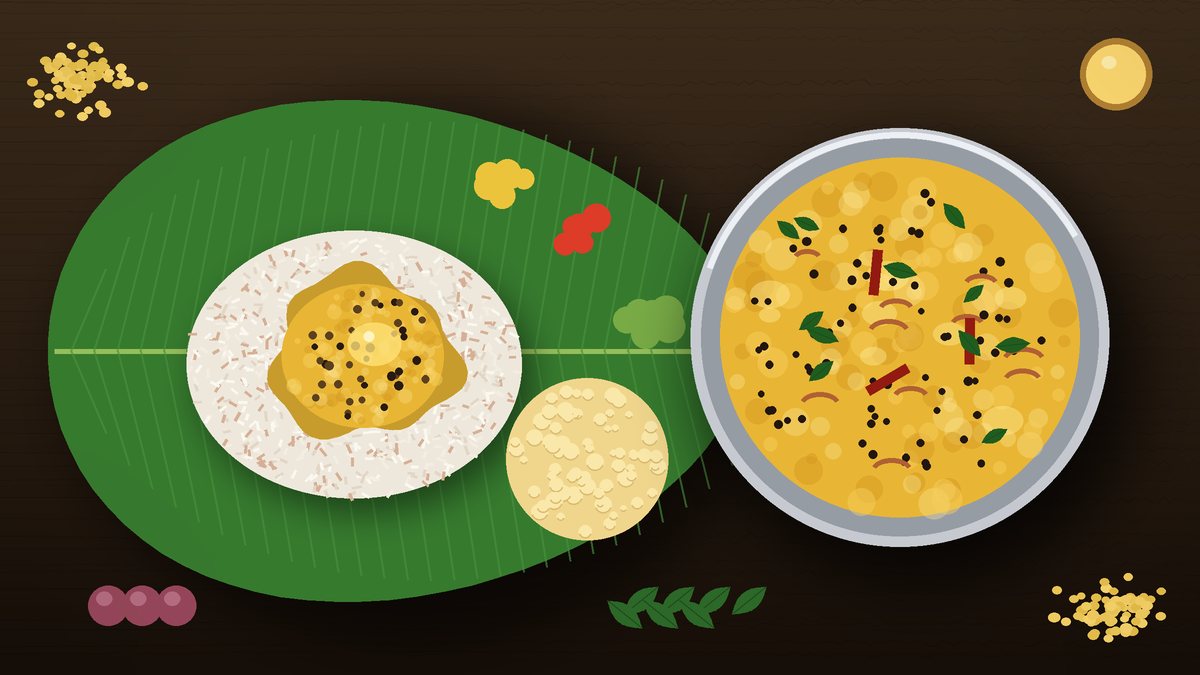
The short answer: Sadya parippu curry is split moong dal cooked soft with turmeric, mashed smooth, then simmered briefly with a fine paste of coconut, cumin, green chilli and a little garlic, and finished with mustard seeds, shallots, dried red chillies and curry leaves fried in ghee. It should be thick but pourable, mild rather than spicy, and it is the first curry you eat at a Kerala sadya, mixed into hot rice with a spoon of ghee and a crushed pappadam. The whole recipe takes about 35 minutes.
Why parippu comes first at a sadya
At a traditional Kerala sadya, the banana leaf fills up with side dishes before the rice arrives. The first curry served over that rice is parippu. Kerala Tourism describes it simply: the first curry, made of green gram (moong dal) or pigeon peas (toor dal). It is poured over a small portion of rice, a little ghee goes on top, and you crush a pappadam into it with your fingers.
That order is not an accident. Parippu is gentle, buttery and lightly spiced, so it opens the meal before the sour and spicy curries take over. After it come sambar, then the thinner curries such as rasam and moru, with the payasams at the end. If your parippu is too spicy or too watery, the whole first course feels wrong, which is why it is worth getting this simple dish exactly right.
The lentil is cherupayar parippu, the split and husked seed of the mung bean (Vigna radiata, Britannica). It cooks quickly without soaking and turns creamy when mashed, which is exactly the texture you want.
At a glance
- Serves: 4 as part of a sadya, 2 to 3 as a main dal with rice
- Time: about 35 minutes, no soaking needed
- Heat level: mild; the green chilli should be felt, not tasted first
- Diet: vegetarian; vegan if you temper in coconut oil and skip the ghee on the rice
Ingredients
For the dal
- 1/2 cup (about 100 g) split yellow moong dal (cherupayar parippu)
- 2 cups water
- 1/4 tsp turmeric powder
- 3/4 tsp salt, or to taste
For the coconut paste
- 1/2 cup grated coconut, fresh or frozen and thawed
- 1/2 tsp cumin seeds (jeerakam)
- 2 green chillies
- 2 shallots (cheriya ulli), peeled
- 1 small clove garlic (optional; many traditional sadya kitchens leave it out)
- 3 to 4 tbsp water for grinding
For the tempering and serving
- 1 tbsp ghee (or coconut oil)
- 1/2 tsp mustard seeds
- 2 shallots, thinly sliced
- 2 dried red chillies, broken in half
- 1 sprig curry leaves
- Hot rice, extra ghee and pappadam to serve
Step 1: Roast, rinse and cook the moong dal
- Put the dry moong dal in a heavy pan on low heat and stir for 3 to 4 minutes, until it smells nutty and looks a shade deeper. Do not let it brown. This light roast is optional, but it is what gives sadya parippu its warm, toasty taste.
- Tip the dal into a bowl, cool for a minute, then rinse it two or three times until the water runs mostly clear.
- Pressure-cook the dal with the 2 cups water and the turmeric for 3 whistles on medium heat, about 10 minutes, and let the pressure drop naturally. Without a cooker, simmer it partly covered for 25 to 30 minutes, stirring now and then and adding hot water if it catches.
- Whisk or mash the cooked dal until completely smooth. A wooden mathu or the back of a ladle works well. There should be no whole grains left.
Step 2: Grind the coconut paste
Grind the coconut, cumin, green chillies, shallots and garlic (if using) with 3 to 4 tbsp water to a very fine paste. Take your time: a coarse paste leaves the curry grainy, while a smooth one makes it silky. Many cooks keep a tablespoon of the paste aside and add it at the end only if the curry needs more body.
Step 3: Simmer the curry
- Return the mashed dal to low-medium heat and add about 1/2 cup water and the salt. Stir until it is evenly loose.
- Add the coconut paste and stir well. Let it come to a gentle simmer and cook for 3 to 4 minutes, until the raw smell of coconut is gone and a few bubbles break the surface.
- Do not boil it hard after the coconut goes in. Strong boiling can make the coconut split and taste flat.
- Check the texture: it should coat the back of a spoon and fall off in a thick ribbon. Add a splash of hot water if it is too thick.
Step 4: Temper in ghee
Heat the ghee in a small pan. Add the mustard seeds and let them pop, then add the sliced shallots and fry until light golden. Add the dried red chillies and curry leaves, stir for a few seconds until the leaves crackle, and pour everything over the parippu. Cover for a couple of minutes before serving so the flavour settles in. Ghee is the traditional choice here because the dish is eaten with ghee anyway; coconut oil gives a more everyday, homely taste.
Getting the consistency right
Sadya parippu sits between a thick dal and a thin soup. It has to stay on a heap of rice for a moment rather than run straight across the banana leaf into the avial, yet it must still mix easily with rice and ghee. Parippu thickens as it cools, so aim slightly looser in the pot than you want on the leaf. If you are cooking a day ahead for a feast, keep some hot water ready to adjust it while reheating.
Variations worth knowing
Toor dal parippu
Some regions and families use toor dal (pigeon peas) instead of moong. Soak it for 30 minutes and cook for 4 to 5 whistles, then follow the same steps. The curry is a little heavier and more golden, and it holds well in a big pot.
Everyday parippu without coconut
For a quick lunch, skip the coconut paste. Simmer the mashed dal with a slit green chilli, a crushed garlic clove and salt, then temper with coconut oil, mustard seeds, shallots and curry leaves. It is lighter and pairs well with a dry vegetable like cabbage thoran.
Cheera parippu curry
Stir a large handful of chopped spinach or red amaranth (cheera) into the dal along with the coconut paste and simmer until it wilts. It is not a sadya dish, but it is one of the most common home-style uses of this exact base.
Common mistakes and quick fixes
- Grainy texture: the dal was undercooked or the paste was coarse. Cook until the dal collapses and grind the coconut longer.
- Too spicy: sadya parippu should be mild. Use fewer or less fiery green chillies; the spice comes later in the meal.
- Flat or bland taste: add salt in small steps and taste again after a minute, and do not skip the ghee tempering.
- Separated, oily look: the curry boiled hard after the coconut went in. Keep the heat low next time and whisk in a little hot water now.
Storage and making ahead
Parippu keeps for 2 days in the fridge in a covered container. It sets firm when cold, so reheat it gently with a few spoons of hot water, stirring, until it is smooth and steaming. For a sadya, you can cook and mash the dal the day before and add the coconut paste and tempering on the morning of the meal, which tastes fresher than reheating the finished curry.
Building the rest of the sadya
Once parippu is on your list, the rest of the leaf comes together easily. Serve it with sambar, olan, erissery and avial, and finish with palada payasam or ada pradhaman. The full sadya menu guide shows the serving order on the leaf, and the Kerala recipe collection has the other dishes step by step.
Frequently asked questions
What is parippu in English?
Parippu is the Malayalam word for lentils or dal. In a sadya it usually means split moong dal (green gram) cooked with coconut, though some families use toor dal.
Is parippu curry the same as dal?
It is a dal, but a specific Kerala style: mashed very smooth, simmered with a fine coconut, cumin and green chilli paste, and tempered in ghee. It is milder and creamier than most North Indian dals, with no tomato or garam masala.
Do I need to soak moong dal for parippu?
No. Split moong dal cooks soft in about 10 minutes in a pressure cooker or 25 to 30 minutes in a pot without soaking. Toor dal benefits from a 30-minute soak.
Why is ghee poured over parippu at a sadya?
Ghee mixed with parippu and rice is the traditional first taste of the meal. It rounds out the mild dal and makes the crushed pappadam cling to the rice.
Sources
- Kerala Tourism, "Onasadya" (parippu as the first curry, made from green gram or pigeon peas).
- Encyclopaedia Britannica, "Mung bean" (Vigna radiata).