Idiyappam with Chicken Stew: Soft Kerala String Hoppers at Home
How to make soft idiyappam (nool puttu) with roasted rice flour and boiling water, press and steam it, and loosen a Kerala chicken stew so it soaks into the strings.
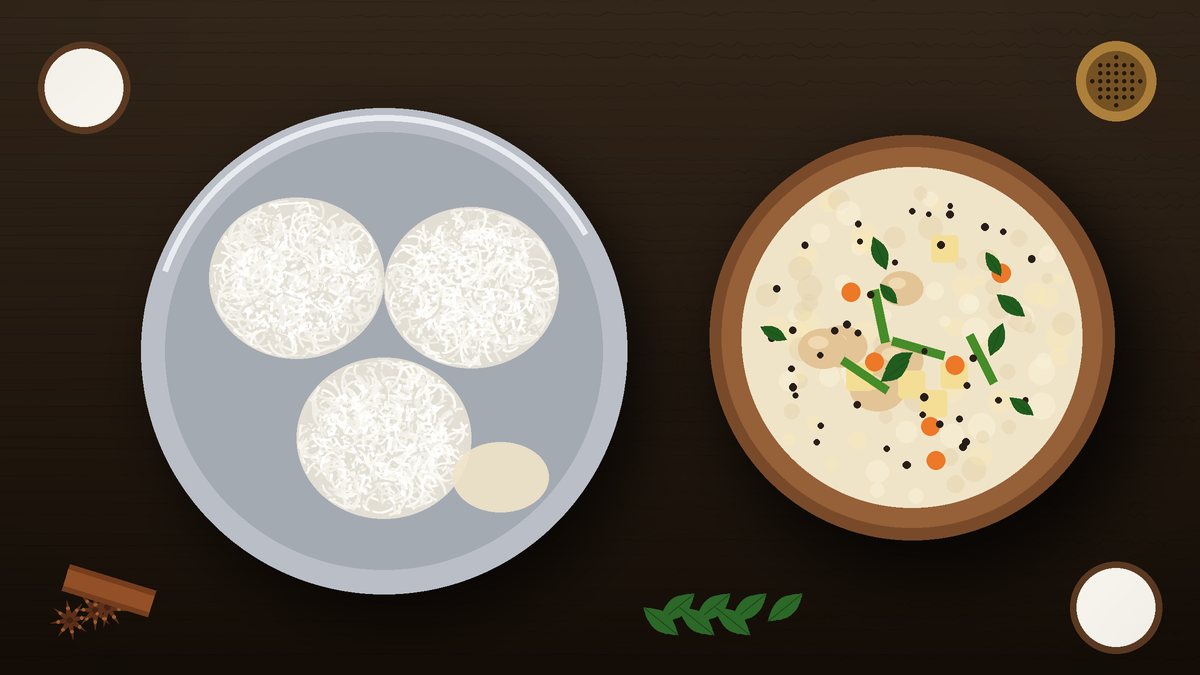
The short answer: Idiyappam is made by pouring boiling salted water over roasted rice flour, kneading it into a soft, smooth dough while it is still warm, pressing it through a fine idiyappam press onto plates sprinkled with grated coconut, and steaming it for 8 to 10 minutes. Serve it hot with a Kerala chicken stew that has been loosened a little, so the coconut-milk gravy soaks into the strings instead of sitting on top. Plan about 30 minutes for the idiyappam once the stew is simmering.
Why idiyappam and stew belong together
Idiyappam, also called nool puttu or string hoppers, is a breakfast of fine steamed rice noodles. On its own it tastes of almost nothing but toasted rice and coconut, which is exactly the point: it is a sponge for whatever you pour over it. Kerala Tourism's own recipe keeps it to three ingredients (roasted rice powder, grated coconut and salt) and pairs it with egg roast, but in many Kerala homes the Sunday or festive breakfast plate is idiyappam with a mild, peppery chicken stew.
The two are a natural match. The stew is gentle, flavoured with whole spices, ginger and green chilli rather than chilli powder, and its thin coconut-milk gravy runs into every gap between the strands. A thick, spicy curry clumps on idiyappam; a light stew coats it. If you have already made our stew for appam, this page shows you the other half of the plate and the small change the stew needs.
At a glance
- Makes: 10 to 12 idiyappam, enough for 3 to 4 people with stew
- Time: 10 minutes for the dough, 15 to 20 minutes to press and steam in two batches
- Equipment: an idiyappam press (sevanazhi) with the fine string disc, and idli plates or idiyappam plates in a steamer
- Diet: idiyappam itself is vegan and made only of rice flour, water, salt and coconut
Ingredients
For the idiyappam
- 1 cup (about 160 g) roasted rice flour, sold as idiyappam podi or pathiri podi (fine, not the coarse puttu podi)
- 1 1/4 to 1 1/2 cups water
- 1/2 tsp salt
- 1 tsp coconut oil, plus a little for greasing the press and plates
- 1/4 to 1/3 cup freshly grated coconut
For serving
- One batch of Kerala chicken stew (about 4 servings)
- 1/2 to 3/4 cup hot water to loosen the stew
- A few extra curry leaves and a pinch of crushed black pepper, optional
Start the stew first
The stew takes longer than the idiyappam, and it tastes better after resting for 15 minutes, so put it on first. Cook it exactly as written in our chicken stew recipe up to the point where the chicken and potatoes are tender in the thin coconut milk. Hold back the thick first milk.
The one change for idiyappam is consistency. A stew for appam can be fairly thick, because appam has a soft, spongy centre that holds gravy. Idiyappam needs a gravy that flows. Add 1/2 to 3/4 cup hot water, simmer for two minutes, then stir in the thick milk and take the pot off the heat as soon as it is steaming. Boiling after the thick milk goes in can split it. The stew should run off a spoon in a thin stream, not drop in blobs.
How to make the idiyappam
1. Boil the water properly
Bring the water, salt and coconut oil to a full, rolling boil. This is the single step that decides whether your idiyappam is soft. Hot tap water or water that has only just started to simmer will not cook the flour enough, and the dough will crack in the press and the strings will break.
2. Make the dough
Put the rice flour in a wide bowl. Pour in about 1 cup of the boiling water while stirring with the handle of a wooden spoon, then add more a few tablespoons at a time until there is no dry flour left and the mixture looks like crumbly, damp sand that holds together when pressed. Cover the bowl with a plate for 5 minutes so the steam softens the flour.
When it is cool enough to touch but still warm, knead for 2 to 3 minutes. Grease your palms with a drop of oil. The finished dough should be smooth, soft and slightly sticky, like soft chapati dough. Roll a small ball and flatten it between two fingers: if the edges crack, knead in a tablespoon of hot water. If it sticks to your hand like paste, you added too much water; sprinkle in a spoon of flour and knead again.
3. Press
Grease the idli or idiyappam plates and the inside of the press. Sprinkle a teaspoon of grated coconut into each mould. Fill the press with a portion of dough, close it and press in small circles over each mould, two or three layers thick. Keep the strands loose. Packed tightly, they steam into a heavy cake. Finish each one with a little more coconut on top.
Keep the rest of the dough covered with a damp cloth while you work. Dough that cools and dries out is hard to press.
4. Steam
Steam over boiling water for 8 to 10 minutes. Kerala Tourism gives five to ten minutes; in a home steamer with full plates, 8 is usually right. The idiyappam is done when the strands look slightly glossy and no longer feel sticky when you touch one with a wet finger. Let the plate rest out of the steamer for a minute, then lift each round out with a spoon.
Serving it the Kerala way
Put two or three idiyappam on a plate, break them open a little with your fingers, and ladle the hot stew over and around them so a piece of chicken and a piece of potato sit on top. Some families add a few drops of coconut oil or a spoon of the thick stew gravy straight onto the strands. Eat it with your hand if you can: you pinch the strands together with gravy, which is the reason the stew has to be thin.
If you are cooking for a crowd, keep the steamed idiyappam in a closed casserole lined with a clean cloth. They stay soft for about an hour.
Troubleshooting soft idiyappam
- Hard to press, or the press handle bends: the dough is too dry or has cooled. Knead in hot water a tablespoon at a time and press while the dough is warm.
- Strands break into short bits: the water was not boiling, or the flour is raw rice flour. Use roasted flour and fully boiling water.
- Sticky, mushy idiyappam: too much water in the dough, or it was steamed for too long. Reduce the water next time and check at 8 minutes.
- Hard and chewy after cooling: it dried out in the open. Re-steam for 2 minutes and keep it covered.
- Stew sits on top in a thick layer: the gravy is too thick. Loosen it with hot water and reheat gently.
Using raw rice flour
If you only have raw (unroasted) rice flour, roast it first. Dry-roast it in a heavy pan on low heat for 8 to 10 minutes, stirring all the time, until it flows freely like sand, feels warm and dry, and smells faintly toasty. It should not change colour. Cool it completely and sift it before you make the dough. The same roasted flour also works for puttu if you sprinkle it with water instead of making a dough, though shop-bought puttu podi is coarser on purpose.
Other curries to serve with idiyappam
- Egg roast: the pairing Kerala Tourism highlights. Thin the onion masala slightly with water so it reaches the strands.
- Kadala curry: a vegetarian option; mash a few chickpeas into the gravy so it clings better.
- Sweet idiyappam: children often eat it with sugar, grated coconut and a mashed ripe banana. It is also a good way to finish leftovers.
- Seafood: a thin, mild fish curry works better than a dry fish fry.
Frequently asked questions
Is idiyappam the same as string hoppers?
Yes. String hoppers is the common English and Sri Lankan name, nool puttu is another Malayalam name, and idiyappam is what most Kerala families call it. Preparation varies a little by region, but the rice-flour dough pressed into strands and steamed is the same idea.
Can I make idiyappam without a press?
Not really. You need a press with a fine perforated disc to make the strands. A murukku press with the finest plate works if you already own one. A piping bag cannot handle this dough.
Is idiyappam gluten-free?
The traditional recipe uses only rice flour, water, salt and coconut, so it contains no wheat. If you cook for someone with coeliac disease, check that the packaged flour is labelled gluten-free, because it may be processed in mills that also handle wheat.
Can I make the dough ahead?
No. Make the dough just before you press it. Once it cools and dries, it becomes hard to press and the strands crack. You can steam the idiyappam up to an hour ahead and keep it covered, or re-steam it for 2 minutes.
Sources
- Kerala Tourism, Idiyappam (Nool Puttu): roasted rice powder, grated coconut and salt; dough made with boiling salted water; pressed through a sevanazhi and steamed for five to ten minutes.
- Kerala Tourism, Idiappam and Egg Roast: the classic Kerala breakfast pairing.