Kerala Kadala Curry for Puttu: Black Chickpea Curry Recipe
How to make Kerala kadala curry with black chickpeas and roasted coconut, thick enough for puttu and easy to loosen for appam or idiyappam.
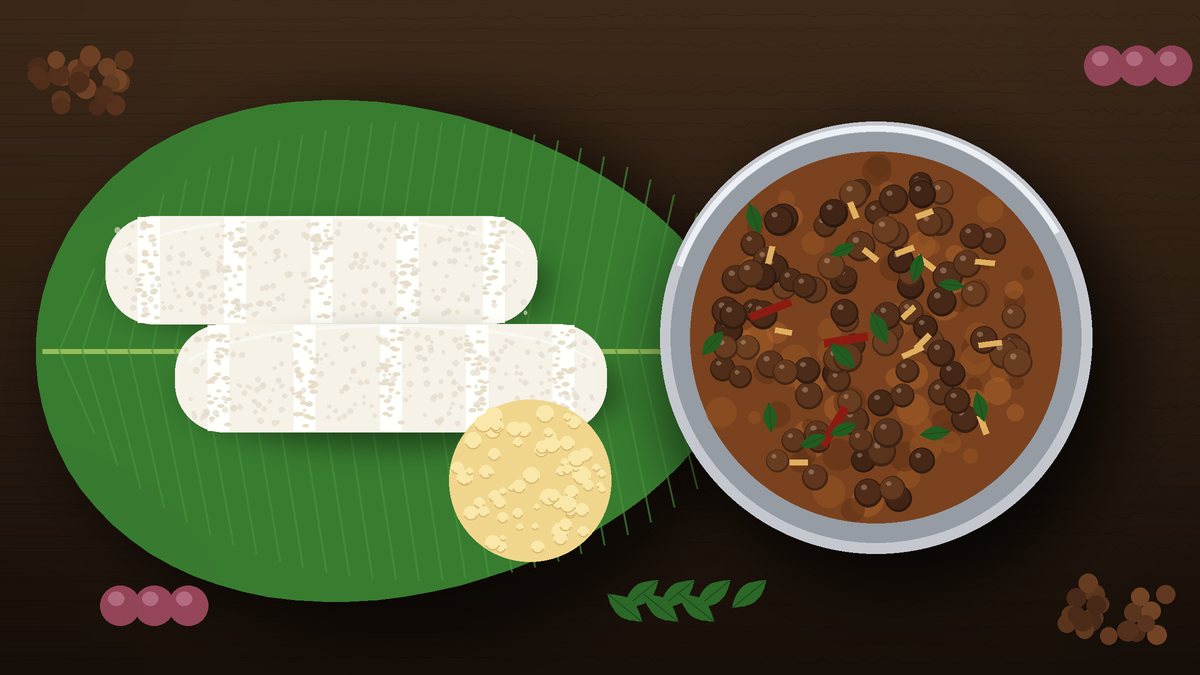
The short answer: Kerala kadala curry is made with small black chickpeas (Bengal gram), soaked overnight and pressure-cooked soft, then simmered in a gravy of shallots, ginger and curry leaves thickened with coconut that has been roasted until deep brown and ground smooth. For puttu, keep it thick enough to mash into the steamed rice cylinders; for appam or idiyappam, loosen it with a little more water. The whole recipe below takes about 45 minutes of active cooking once the chickpeas have soaked.
Why puttu and kadala belong together
Puttu is dry by design: steamed rice flour layered with grated coconut. It needs something wet, spicy and a little earthy to break into, and kadala curry does exactly that. In most Malayali homes the breakfast plate is puttu, kadala and a crisp pappadam, sometimes with a ripe banana on the side. You crumble the puttu, pour the curry over, crush the pappadam into it and mix everything with your fingers.
Kadala is the Malayalam name for chickpeas. The variety used here is the small, dark brown desi chickpea, called black chana or kala chana in North India and Bengal gram in English. It is the same plant as the larger cream-coloured kabuli chickpea (Cicer arietinum, Britannica), but the seed is smaller with a thicker skin, so it holds its shape and gives the gravy a nutty bite.
At a glance
- Serves: 4 with puttu or appam
- Soaking: 8 to 10 hours, or overnight
- Cooking: about 45 minutes (25 for the chickpeas, 20 for the gravy)
- Style: varutharacha, meaning made with roasted and ground coconut
- Diet: vegan when cooked in coconut oil
Ingredients
For the chickpeas
- 1 cup (about 200 g) black chickpeas (kadala)
- 2 1/2 cups water for cooking, plus water for soaking
- 3/4 tsp salt
For the roasted coconut paste
- 3/4 cup grated coconut, fresh or frozen
- 4 shallots, sliced
- 1 tsp fennel seeds (perumjeerakam)
- 1/2 tsp black peppercorns
- 2 cloves and a 1-inch piece of cinnamon
- 2 tsp coriander powder
- 1 tsp Kashmiri chilli powder (add 1/2 tsp hot chilli powder if you like it fiery)
- 1/4 tsp turmeric powder
- 1 tsp coconut oil
For the gravy and finish
- 2 tbsp coconut oil
- 1/2 tsp mustard seeds
- 10 shallots or 1 medium onion, thinly sliced
- 1 tbsp each chopped ginger and garlic
- 2 green chillies, slit
- 2 sprigs curry leaves
- 1 small tomato, chopped (optional, see the note below)
- To temper: 1 tbsp coconut oil, 2 tbsp thin coconut slivers (thenga kothu), 2 dried red chillies, a few curry leaves
Step 1: Soak and cook the kadala
- Pick over the chickpeas for small stones, rinse twice and cover with at least three times their volume of water. Soak for 8 to 10 hours. They should roughly double in size.
- Drain, add the 2 1/2 cups fresh water and the salt, and pressure-cook on medium heat for 5 to 6 whistles, about 20 to 25 minutes. Let the pressure drop on its own.
- Check one chickpea: it should crush easily between your thumb and finger but still keep its skin. If it is firm in the centre, cook for two more whistles. Keep the cooking water; it is the base of the gravy.
No pressure cooker? Simmer the soaked chickpeas, covered, in a heavy pot with plenty of water for 60 to 90 minutes, topping up with hot water as needed.
Step 2: Roast and grind the coconut
This step decides how the curry tastes, so give it time. Roasting turns the coconut nutty and slightly smoky and gives the gravy its brown colour without any onion-tomato masala.
- Heat 1 tsp coconut oil in a heavy pan on medium-low. Add the fennel, peppercorns, cloves and cinnamon and stir for 30 seconds.
- Add the grated coconut and the 4 sliced shallots. Keep stirring for 8 to 10 minutes until the coconut is an even deep golden brown, the colour of a cinnamon stick, and smells toasty. Lower the heat if the edges darken before the centre.
- Turn off the heat and stir in the coriander powder, chilli powder and turmeric. The heat of the pan is enough to cook them; on the flame they burn and turn bitter.
- Cool for a few minutes, then grind with about 1/2 cup water to a smooth, thick paste. A few seconds more in the grinder makes a silkier gravy.
Step 3: Build the gravy
- Heat 2 tbsp coconut oil in a kadai or pot. Splutter the mustard seeds, then add the sliced shallots or onion with a pinch of salt and cook until soft and light brown, about 6 minutes.
- Add the ginger, garlic, green chillies and one sprig of curry leaves. Saute for a minute until the raw smell goes. Add the tomato now if using and cook until it breaks down.
- Stir in the coconut paste and fry for 2 minutes, scraping the bottom, until the oil starts to glisten at the edges.
- Add the cooked chickpeas with their water. Bring to a boil, then simmer uncovered for 10 to 12 minutes, stirring now and then.
- Mash a ladleful of chickpeas against the side of the pot. This thickens the gravy naturally and helps it cling to puttu. Taste for salt.
Step 4: The coconut-oil tempering
Heat 1 tbsp coconut oil in a small pan. Fry the coconut slivers until golden, add the dried red chillies and the last curry leaves, and pour the sizzling oil over the curry. Cover the pot for five minutes before serving so the aroma settles into the gravy. The fried coconut bits are optional, but they are the detail that makes it taste like a Kerala breakfast rather than a generic chickpea curry.
Getting the consistency right
- For puttu: thick and spoonable, about the texture of a thick dal. The puttu soaks up a lot of liquid, but a runny curry makes it soggy.
- For appam or idiyappam: add 1/2 to 3/4 cup hot water and simmer for 2 minutes so it flows. Our appam soaks up a looser gravy beautifully.
- For chapati or Kerala parotta: keep it on the thick side and add a final pinch of garam masala.
The curry thickens as it stands, so it will always look thinner in the pot than on the plate ten minutes later.
Two easy variations
Kadala curry without roasting coconut
For a quicker weekday version, skip Step 2. Cook the shallots, ginger and garlic as above, add 1 tsp coriander powder, 1 tsp chilli powder, 1/4 tsp turmeric and 1/2 tsp garam masala, fry until fragrant, then add a chopped tomato and the chickpeas. Finish with 1/2 cup thick coconut milk and simmer briefly without boiling hard. It is milder and creamier, closer to what many homes serve with appam.
Kadala curry with potato
Add one peeled, cubed potato to the pressure cooker with the soaked chickpeas. It stretches the curry for a larger family and makes the gravy even thicker for puttu.
Common mistakes and quick fixes
- Chickpeas stay hard: they were old stock or under-soaked. Buy from a shop with quick turnover, soak overnight, and cook a little longer rather than adding baking soda, which can make them mushy and dull the taste.
- Gravy tastes bitter: the coconut or the spice powders burnt. Roast on lower heat and add the powders off the flame.
- Gravy tastes raw or gritty: the coconut was under-roasted or ground too coarse. Grind longer and fry the paste until the oil separates.
- Flat taste: almost always salt. Season the chickpeas while cooking and taste again at the end.
Storage and making ahead
Kadala curry tastes even better the next day. Cool it quickly, cover and refrigerate for up to 3 days. It thickens in the fridge, so reheat with a splash of water until bubbling. The roasted coconut paste can be made a day ahead and kept chilled, and soaked chickpeas can be cooked and refrigerated for 2 days, which turns a weekday breakfast into a 15-minute job.
What else to serve
For a fuller breakfast spread, pair puttu with kadala on one day and with our Kerala egg roast on another; both share the same shallot-and-coconut-oil base. If you are cooking for guests, a mild chicken stew with appam makes a good second curry. Browse the full Kerala recipe collection for more breakfast ideas.
Frequently asked questions
What is kadala in English?
Kadala means chickpeas. Kerala kadala curry uses the small black or brown variety, known in English as Bengal gram or black chickpeas and in Hindi as kala chana.
Can I use white chickpeas instead?
Yes. White (kabuli) chickpeas cook faster, usually 3 to 4 whistles after soaking, and give a softer, creamier curry. The taste is good, though less nutty than the traditional version.
Can I use canned chickpeas?
Canned black chickpeas are rare, but canned white chickpeas work in a pinch. Rinse them well, skip Step 1 and use plain water or vegetable stock for the gravy.
Is kadala curry vegan?
Yes, as written. Everything is plant-based and cooked in coconut oil. Avoid adding ghee if you are cooking for vegan guests.
Sources
- Encyclopaedia Britannica, "Chickpea" (plant profile, also known as Bengal gram, Cicer arietinum).