Kerala Fish Fry: Meen Varuthathu Masala and Method
How to make Kerala fish fry at home: a thick chilli-pepper paste with rice flour, the right fish (mathi, ayala, neymeen), a 20-minute rest and a slow coconut-oil fry with curry leaves until the masala turns into a crisp red crust.
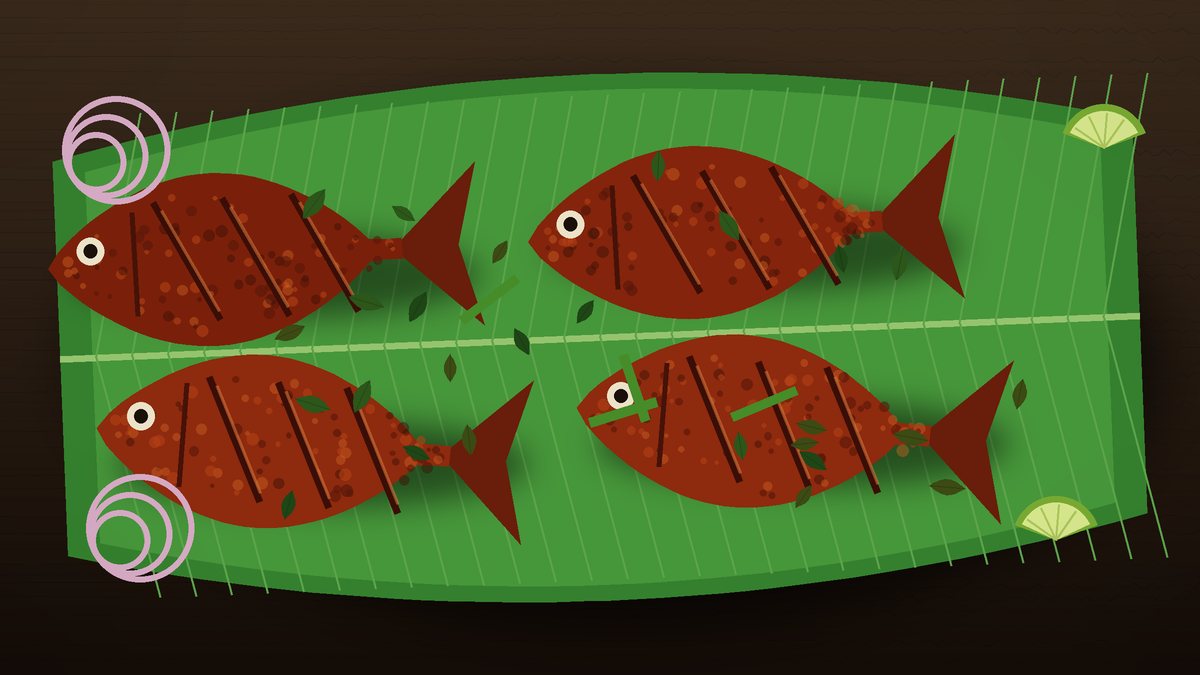
The short answer: Kerala fish fry, or meen varuthathu, is fish coated in a thick paste of Kashmiri chilli, turmeric, black pepper, ginger, garlic, salt and a little lime juice, rested for 20 to 30 minutes and then shallow-fried in coconut oil until the masala turns into a dark red crust. Curry leaves go into the hot oil near the end. Sardine (mathi), mackerel (ayala) and seer fish steaks (neymeen) are the classic choices. For 500 g of fish you need about 15 minutes of prep, a 20-minute rest and 10 to 12 minutes of frying.
What makes a fish fry "Kerala style"
Most Indian fish fries use a dry spice rub or a batter. The Kerala version uses a paste: the spices are ground with a few drops of water or lime juice so they cling to the fish like a second skin. When that paste meets hot coconut oil, it fries into a crust that is crisp at the edges and still juicy underneath. Pepper is as important as chilli here. It gives the heat a sharp, aromatic edge that you do not get from chilli powder alone.
Kerala Tourism's own recipe for kozhuva varuthathu (anchovy fry) shows the core method in its simplest form: chilli powder, whole pepper, turmeric and a little rice flour ground to a fine paste, ginger-garlic, salt and lime, a 15-minute rest, then a slow fry in a kadai with curry leaves added to the oil at the end. Every home has its own extras, such as shallots, fennel or a spoon of vinegar, but that base does not change.
Fish fry is not a curry, so it sits beside one. A typical Kerala lunch pairs it with rice, a meen curry or a light parippu curry, a thoran and pickle. With kappa and red fish curry, a few pieces of fried mathi on the side are almost expected.
At a glance
- Serves: 3 to 4 as a side
- Fish: 500 g cleaned fish: 6 to 8 sardines, 3 to 4 mackerel, or 6 seer fish steaks about 1.5 cm thick
- Time: 15 minutes prep, 20 to 30 minutes marinating, 10 to 12 minutes frying per batch
- Pan: a heavy flat tawa or a wide cast-iron pan; non-stick works for steaks
Which fish to use (and what to skip)
- Mathi (sardine): the everyday Kerala fry. Oily, cheap, full of flavour. Fry whole after cleaning, with two or three slits on each side.
- Ayala (Indian mackerel): firm and rich. Fry whole with deep slits so the masala reaches the bone.
- Neymeen (seer fish or king fish): the "special occasion" fry. Cut into steaks; it holds together well and has few small bones.
- Avoli (pomfret): mild and delicate. Score it in a cross-hatch and fry gently.
- Kozhuva or netholi (anchovy): fried in a crisp heap, often with extra curry leaves.
Karimeen (pearl spot) also fries well, but it is at its best wrapped in banana leaf, which is a different dish. See our karimeen pollichathu for that.
Skip the tiny ones. This matters this month. In mid-October 2026, The Hindu reported fishermen on the Kozhikode coast saying that undersized sardine and mackerel are being caught in large quantities. A week later, The New Indian Express reported that fishers and scientists want Kerala's minimum legal size rules revised because juvenile fishing has become rampant. Kerala has a notified minimum legal size list for around 60 species. According to The Hindu, the limit is 10 cm for sardine and 15 cm for mackerel. A sardine shorter than about the width of an adult palm is probably below the limit, so pass it over. Bigger fish are better for frying anyway: they hold the masala and do not dry out.
At the market, look for clear, bulging eyes, bright red gills, firm flesh that springs back and a clean sea smell. Oily fish like sardine and mackerel do not keep long. FoodSafety.gov's storage chart gives 1 to 3 days in the fridge for fatty fish such as mackerel, so fry it on the day you buy it if you can.
Ingredients
Fish fry masala (for 500 g fish)
- 1 1/2 tbsp Kashmiri chilli powder (for colour)
- 1/2 tsp hot red chilli powder (optional, for heat)
- 1/4 tsp turmeric powder
- 1 tsp black pepper, freshly crushed
- 1 tsp ginger paste and 1 tsp garlic paste (or crush 1 inch ginger and 5 cloves garlic together)
- 4 to 5 shallots (cheriya ulli), crushed (optional but very Kerala)
- 1 tsp rice flour
- 1 tbsp lime juice, or 2 tsp vinegar
- 3/4 tsp salt
- 1 to 2 tsp water or coconut oil, only to bring the paste together
To fry
- 4 to 5 tbsp coconut oil
- 2 sprigs curry leaves
- 2 green chillies, slit (optional)
- Lime wedges and sliced onion to serve
Step-by-step method
1. Clean, slit and dry the fish
Scale and gut the fish, trim the fins and rinse well. For whole sardines and mackerel, cut two or three diagonal slits down to the bone on each side. For steaks, a shallow cross-hatch is enough. Now dry the fish thoroughly with a cloth or paper towel. This is the step that decides whether the masala sticks. Kerala Tourism's recipe puts it simply: squeeze out all the water.
2. Make a thick paste
Mix all the masala ingredients in a bowl. Add water drop by drop until you have a paste as thick as toothpaste. If it runs, it will slide off in the pan. The rice flour helps it hold and gives the crust its crunch. Taste a tiny bit: it should be salty and sharp, because the fish itself is unseasoned.
3. Marinate
Rub the paste over the fish, pushing it into the slits and the belly cavity. Leave it for 20 to 30 minutes, covered. If you need longer, keep it in the fridge for up to 2 hours. More than that and the lime starts to turn the flesh soft and chalky.
4. Fry on medium heat
Heat 3 tbsp coconut oil in the pan over medium heat until it shimmers. Lay the fish in a single layer without crowding. Leave it alone for 4 to 5 minutes. The masala needs that time to set into a crust. If you move it too early, the crust tears away. When the edges look dark red and the fish releases easily, turn it once with a flat spatula. Add a little more oil around the edges and fry the second side for 3 to 4 minutes. Seer fish steaks need about the same; small anchovies need only 2 to 3 minutes per side.
5. Add curry leaves and chillies
In the last minute, add the curry leaves and slit green chillies to the oil around the fish. They crackle and turn crisp, and the oil picks up their aroma. Lift the fish onto a plate with the fried leaves on top.
6. Check it is cooked
Cooked fish turns opaque and flakes easily at the thickest part near the bone. FoodSafety.gov's minimum safe temperature for fin fish is 145°F (63°C). With a whole mackerel, pull the flesh away at the deepest slit to check. If the outside is browning too fast and the centre is still pink, lower the heat and cover the pan for a minute.
Variations
- Restaurant style: grind 8 shallots, a little ginger and 1/4 tsp fennel into the masala, then fry the fish with plenty of curry leaves. This gives the thick, red, slightly sweet crust you get at Kerala toddy shops and hotels.
- Air fryer: brush the marinated fish with 1 to 2 tsp coconut oil and air-fry at about 200°C for 12 to 15 minutes, turning halfway. The crust is lighter and less glossy than pan-fried, so add a few curry leaves fried in a spoon of oil at the end.
- Without lime: use vinegar or a spoon of thick kudampuli water. Both give the same mild sourness.
- Milder for children: use only Kashmiri chilli, halve the pepper and add an extra pinch of turmeric for colour.
Common mistakes and quick fixes
- Masala falls off in the pan: the fish was wet or the paste was too thin. Dry the fish well and add another 1/2 tsp rice flour.
- Bitter, black crust: the heat was too high. Chilli powder burns quickly; fry on medium and turn down once the first side has set.
- Fish sticks to the pan: the oil was not hot enough when the fish went in, or you turned it too soon. Wait until it moves freely.
- Dry, tough fish: overcooked. Small sardines are done in under 10 minutes total.
- Bland inside: the slits were not deep enough. Cut down to the bone so the masala can reach it.
What to serve with Kerala fish fry
The classic plate is hot matta rice with a curry, a vegetable side such as cabbage thoran, and a bowl of rasam or moru (spiced buttermilk). Fish fry also goes well with kappa, appam or a plain parotta. If you are cooking a seafood lunch, pair it with a prawn masala rather than another dry fry.
Note that fish is not part of a traditional vegetarian Kerala sadya. Some Malabar and Christian feasts serve fried fish, but on a classic Onam leaf it does not appear.
Storing leftovers
Fish fry is best eaten within an hour of frying, while the crust is still crisp. If you have leftovers, cool them and refrigerate within two hours. Eat them the next day. Reheat them in a dry pan over low heat, turning once, rather than in a microwave, which makes the crust soggy.
Frequently asked questions
What is meen varuthathu in English?
It means "fried fish". Meen is fish and varuthathu means fried in Malayalam. The name covers any fish shallow-fried in a spice paste, from sardine to seer fish.
Which oil is best for Kerala fish fry?
Coconut oil gives the traditional taste and aroma. Any neutral oil with a high smoke point works, but you will lose some of the Kerala flavour. Many cooks use a neutral oil for frying and add a spoon of coconut oil with the curry leaves at the end.
Can I use corn flour instead of rice flour?
Yes. Corn flour gives a similar crisp coating. Use the same amount and do not add more, or the crust turns pasty.
Can I marinate the fish overnight?
Not with lime or vinegar in the paste. Acid starts to "cook" the surface. If you need to prepare ahead, make the paste without lime, rub it on and refrigerate for up to 8 hours, then add the lime 20 minutes before frying.
Sources
- Kerala Tourism, Kozhuva Varuthathu (Anchovies Fry): spice paste with chilli, whole pepper, turmeric and rice flour, a 15-minute marinade and a slow fry with curry leaves.
- The Hindu, Juvenile fish harvesting raises concerns along Malabar coast (17 October 2026): around 60 species on Kerala's minimum legal size list; 10 cm for sardine and 15 cm for mackerel.
- The New Indian Express, Juvenile fishing rampant, Keralam fishers call for revision of minimum size (24 October 2026).
- FoodSafety.gov, Safe Minimum Internal Temperature Chart: 145°F (63°C) for fin fish.
- FoodSafety.gov, Cold Food Storage Chart: 1 to 3 days in the refrigerator for fresh fatty fish such as mackerel.