Kerala Beef Curry for Parotta (Nadan Thattukada Style)
How to make the thick, pepper-forward Kerala beef curry served with parotta at thattukadas: roasted meat masala, fried coconut slices, deeply browned shallots and a gravy that clings to torn bread.
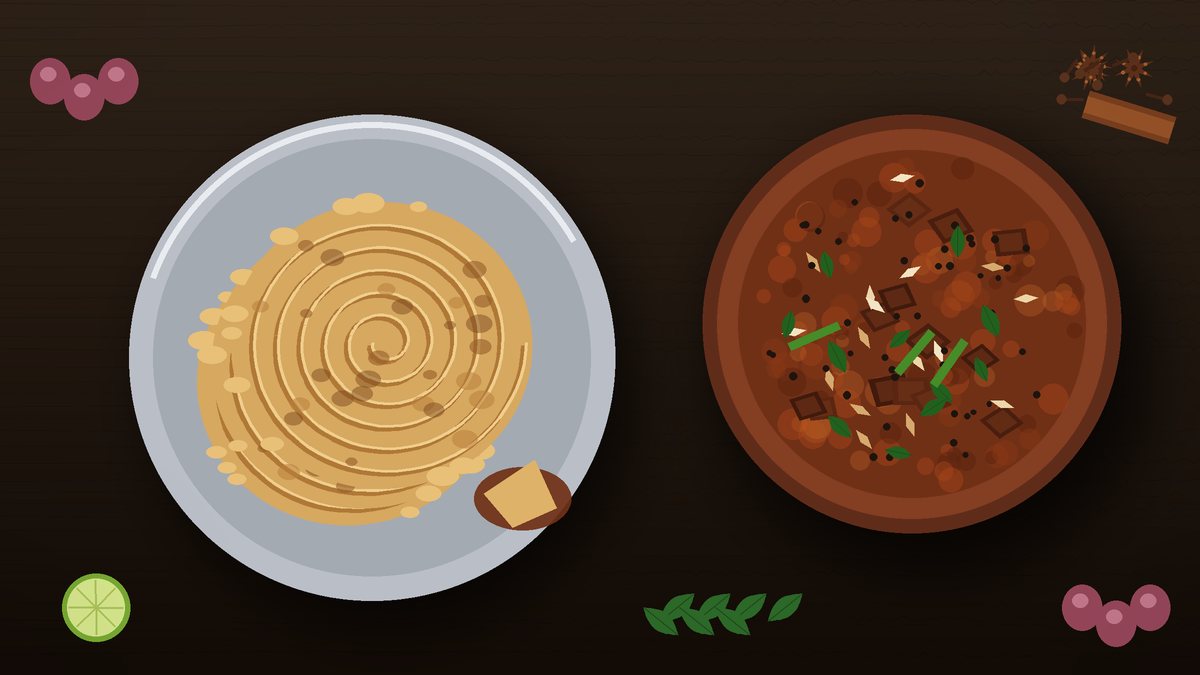
The short answer: A Kerala beef curry for parotta is a thick, dark, pepper-forward curry, not a dry fry and not a thin gravy. Pressure-cook the beef with turmeric, chilli, pepper and half of a freshly roasted meat masala. Then fry coconut slices (thenga kothu), shallots, ginger and garlic in coconut oil until deep brown, add the beef with its stock and simmer until the gravy coats the back of a spoon. Finish with crushed pepper, curry leaves and a spoon of raw coconut oil. The gravy has to cling to torn parotta, so it should be thicker than a curry you would pour over rice. Plan about 1 hour 15 minutes, including 30 to 40 minutes of pressure cooking.
Why parotta needs this particular curry
Porotta and beef is the late-night order at every thattukada (roadside food stall) in Kerala. Kerala Tourism describes porotta as a flaky bread that roadside vendors serve across the state, "often served with a meat curry, such as chicken, goat, beef or lamb". Beef is the pairing most Malayalis think of first.
The bread decides the curry. Parotta is rich and layered, and you eat it by tearing a piece and dragging it through the gravy. A thin, soupy curry runs off the torn edges and leaves the bread dry. A dry roast like our beef ularthiyathu is wonderful, but it gives you nothing to dip. The thattukada curry sits between the two: a deeply browned onion and shallot masala that holds plenty of gravy, but gravy thick enough to stay on the bread. That texture comes from three things: browning the onions properly, letting the beef stock reduce, and the body of slow-cooked shallots. You do not need cream, cashew paste or coconut milk.
At a glance
- Serves: 5 to 6 with parotta
- Time: 15 minutes of prep, 30 to 40 minutes of pressure cooking, about 30 minutes of frying and simmering
- Heat: medium. Kashmiri chilli gives colour and black pepper gives the bite
- Best cut: boneless shoulder or chuck with a little fat, cut into 1 to 1 1/2 inch cubes. Lean cuts dry out and turn stringy
Ingredients
Roasted meat masala (makes about 4 tbsp)
- 2 tbsp coriander seeds
- 1 1/2 tsp black peppercorns
- 1 tsp fennel seeds (perumjeerakam)
- 1 inch cinnamon, 4 cloves, 3 green cardamom pods, 1 small star anise
Dry-roast everything on low heat for 3 to 4 minutes, until the coriander smells toasty and turns a shade darker. Cool it, then grind it to a fine powder. If you are short of time, use 2 1/2 tbsp of a good shop-bought meat masala instead. Freshly roasted masala smells far better, though, and it is the main difference between a home curry and a stall curry.
For pressure-cooking the beef
- 1 kg boneless beef, cubed
- 1/2 tsp turmeric powder
- 1 1/2 tsp Kashmiri chilli powder
- 1 tsp crushed black pepper
- Half of the roasted masala
- 1 tbsp crushed ginger and 1 tbsp crushed garlic
- 1 1/4 tsp salt and 1/3 cup water
For the curry
- 4 tbsp coconut oil, plus 1 tsp to finish
- 1/3 cup thin coconut slices (thenga kothu), each about the size of a fingernail
- 2 medium onions, thinly sliced, and 12 to 15 shallots (cheriya ulli), sliced
- 1 inch ginger and 8 garlic cloves, finely chopped
- 3 green chillies, slit
- 3 sprigs curry leaves
- 1 medium tomato, chopped (optional, for a softer edge)
- 1 tsp Kashmiri chilli powder and 1 tsp coriander powder
- The rest of the roasted masala, plus 1/2 tsp crushed pepper to finish
Step-by-step method
1. Pressure-cook the beef
Wash and drain the beef well. Mix it with all of the pressure-cooking ingredients and leave it for at least 20 minutes, or overnight in the fridge. Pressure-cook it on high heat until the first whistle, then turn the heat to low for 25 to 35 minutes. Buffalo meat and older cuts need the longer end of that range. The beef is done when a cube breaks under gentle pressure from a spoon but still holds its shape. Do not throw away the stock. It is the base of your gravy.
No pressure cooker? Simmer the beef covered in a heavy pot with 1 cup of water for 1 1/2 to 2 hours. Add a splash of water whenever it runs dry.
2. Fry the coconut slices
Heat 4 tbsp of coconut oil in a wide, heavy pan or uruli. Fry the coconut slices on medium heat, stirring often, until they are golden brown at the edges, which takes 3 to 4 minutes. Lift out half of them for the garnish and leave the rest in the oil. Fried thenga kothu is the small crunchy bite that tells you the curry is nadan, or country style.
3. Brown the onions and shallots
Add the curry leaves, ginger, garlic and green chillies to the pan and fry for 1 minute. Add the onions, shallots and a pinch of salt. This is the step that makes or breaks the curry. Cook them for 12 to 15 minutes, stirring every minute or so, until they shrink and turn an even deep golden brown. Pale onions give you a sweet, thin gravy. Properly browned onions give it its colour, body and depth. If they start to catch, add a tablespoon of water and scrape the bottom of the pan.
4. Add the spices
Turn the heat to low. Add the chilli powder, coriander powder and the remaining roasted masala and stir for about 1 minute, until the oil turns red and the raw smell is gone. Add the tomato, if you are using it, and cook until it melts into the masala.
5. Simmer to a coating gravy
Tip in the beef with all its stock. Mix well, cover and simmer on low for 10 minutes. Then uncover and simmer for another 5 to 10 minutes, stirring now and then, until the gravy has thickened and coats the meat. Drag a spoon through the pan: the gravy should close the line slowly, not rush back. Taste it and adjust the salt.
6. Finish
Scatter over the crushed pepper, the reserved coconut slices and a few fresh curry leaves, and drizzle 1 tsp of raw coconut oil on top. Cover and rest the curry for 15 minutes off the heat before serving. It tastes even better after a few hours, and many families make it the night before.
Getting the thattukada taste at home
- Use shallots, not only onions. Shallots melt into the gravy and give it a sweetness you cannot get from big onions alone.
- Let pepper do the work. Stall curries are often hotter from pepper than from chilli. If you want more heat, add pepper at the end instead of more chilli powder.
- Do not drown it. Add water only if the gravy turns pasty. Stock from the cooker is better than water for thinning.
- Make it a day ahead. Resting gives the masala time to soak into the meat and the fat time to round out the gravy.
Serving with parotta
Serve the curry hot with flaky parotta. If you want to make the bread yourself, our Kerala parotta recipe walks through the dough and the stretching. With frozen parotta, cook each one on a hot tawa until both sides blister. Then stack two or three and clap them between your palms to open up the layers, the way thattukada cooks do. A plate of sliced onion with lime and a green chilli is the usual side.
The same curry works with appam, puttu or plain rice. For rice, loosen it with a few tablespoons of hot water. If you want a milder breakfast curry, try our idiyappam with chicken stew. For a meatless plate with parotta, the onion masala of an egg roast is the closest match.
Storing and reheating
Cool the curry and refrigerate it within two hours of cooking. FoodSafety.gov's cold-storage chart gives 3 to 4 days in the fridge for cooked meat leftovers. You can also freeze it in portions for 2 to 3 months. Reheat only what you need, bring it to a full simmer and add a splash of water, because the gravy thickens in the fridge.
Frequently asked questions
What is the difference between beef curry and beef fry?
Beef curry has a gravy built from browned onions and the beef's own stock, so you can dip bread into it. Beef fry, or ularthiyathu, is cooked further until the masala dries out and coats each piece. Both start the same way, but the fry needs another 20 to 30 minutes of roasting in the pan.
Can I add coconut milk?
You can stir in 1/2 cup of thick coconut milk at the end for a milder, creamier curry. Keep it on low heat once the milk goes in. The thattukada version for parotta usually skips it and relies on browned onions for body.
Which beef should I buy?
Ask for boneless curry-cut shoulder or chuck with a little fat. If you buy frozen beef, thaw it overnight in the fridge and drain off the liquid before marinating, otherwise the masala gets watery.
Why is my beef still tough?
It needs more time. Tough cubes almost always mean the beef was undercooked or cut too large. Put the lid back on and give it another 10 minutes under pressure, or simmer it covered until it is tender.
Sources
- Kerala Tourism, Porotta: sold by roadside vendors across Kerala and often served with a meat curry such as chicken, goat, beef or lamb.
- Kerala Tourism, Beef Kurumulakittathu: a Malabar recipe that pressure-cooks spiced beef, then sautés coconut pieces, small onions, ginger and garlic in coconut oil until dark brown before the beef goes in.
- FoodSafety.gov, Cold Food Storage Chart: storage times for cooked meat leftovers.