Kerala Chicken Roast: Nadan Pan-Roasted Chicken
How to make a dark, dry Kerala chicken roast on the stove: slow-browned onions and shallots, a fennel-pepper spice mix, and chicken roasted in its masala until it clings. Serve it with appam or parotta.
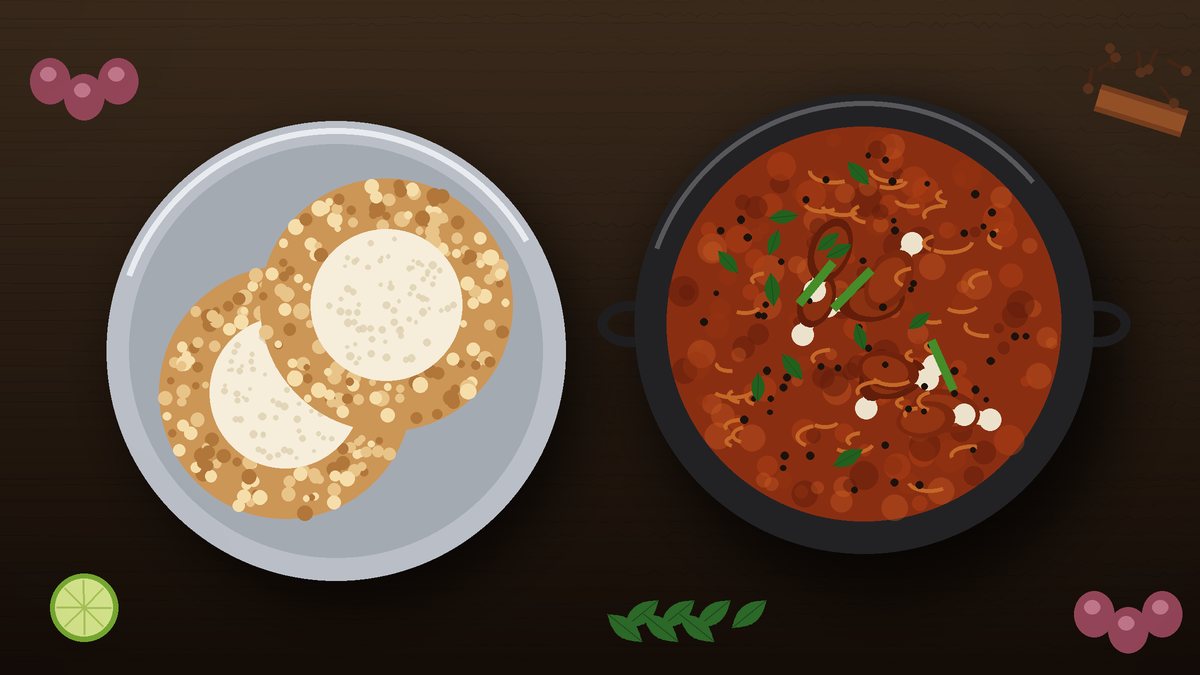
The short answer: Kerala chicken roast is not baked in an oven. It is chicken pan-roasted in coconut oil with a deeply browned onion and shallot masala until the spices cling to every piece and only a little thick gravy is left. Marinate bone-in chicken with chilli, turmeric, pepper, lime and salt, sear it lightly, then cook it in a masala of slow-browned onions, ginger, garlic, tomato and a freshly roasted spice mix. Finish uncovered on high heat so the masala darkens and coats the meat. Expect about 1 hour, including a 30-minute marinade. Serve it with appam, parotta, idiyappam or ghee rice.
What "roast" means in a Kerala kitchen
Ask for chicken roast at a Kerala hotel or a family wedding and you will get a dark red-brown dish with masala stuck to the chicken, not a golden roast bird. In Malayali cooking, a "roast" is a dish that is fried and stirred in its masala until the liquid cooks away. That is why egg roast and chicken roast share the same onion-heavy base, and why both are standard partners for appam and parotta.
There is also an oven-roasted style in Kerala homes. Kerala Tourism's chicken mint roast, for example, is a whole bird marinated in yoghurt, mint and garam masala and baked for a Christmas dinner. It is a lovely dish, but it is a different one. This recipe is the everyday stovetop nadan (country-style) version, and it needs only a heavy pan.
Chicken roast also sits between two dishes you may already know. A chicken stew is pale, mild and swimming in coconut milk. Our beef curry for parotta keeps a dipping gravy. A roast is drier and more intense than both, with the flavour concentrated in a small amount of thick masala.
At a glance
- Serves: 4 to 5
- Time: 30 minutes to marinate, 15 minutes of prep, about 40 minutes of cooking
- Heat: medium-hot. Kashmiri chilli gives the colour, black pepper and green chilli give the heat
- Best cut: 1 kg bone-in curry-cut chicken, skin removed, in medium pieces. Thighs and drumsticks stay juicy; breast alone dries out
Ingredients
Marinade
- 1 kg bone-in chicken, cut into 12 to 14 pieces
- 1 1/2 tsp Kashmiri chilli powder
- 1/2 tsp turmeric powder
- 1 tsp crushed black pepper
- 1 tbsp lime juice
- 1 tsp salt
Roasted spice mix (makes about 2 1/2 tbsp)
- 1 1/2 tbsp coriander seeds
- 1 tsp fennel seeds (perumjeerakam)
- 1 tsp black peppercorns
- 1 inch cinnamon, 4 cloves, 3 green cardamom pods
Roast the seeds and whole spices in a dry pan on low heat for 3 minutes, until the coriander smells nutty and darkens slightly. Cool and grind to a fine powder. Two tablespoons of shop-bought chicken masala will work, but fennel and pepper are what make a Kerala roast taste like one, so add a pinch of each if your masala lacks them.
For the roast
- 4 tbsp coconut oil, plus 1 tsp to finish
- 3 large onions, thinly sliced
- 8 to 10 shallots (cheriya ulli), sliced
- 1 1/2 tbsp crushed ginger and 1 1/2 tbsp crushed garlic
- 3 green chillies, slit
- 3 sprigs curry leaves
- 2 medium tomatoes, chopped
- 1 1/2 tsp Kashmiri chilli powder and 1 tsp coriander powder
- 1/2 cup hot water
- Salt to taste and 1/2 tsp crushed pepper to finish
Step-by-step method
1. Marinate
Wash the chicken, drain it well and pat it dry. Wet chicken dilutes the marinade and will not brown. Rub in the marinade ingredients and leave it for 30 minutes at room temperature or up to 8 hours in the fridge. Lime and salt season the meat all the way through; the chilli gives the roast its colour from the inside.
2. Sear the chicken
Heat 2 tbsp of coconut oil in a wide, heavy pan or cheenachatti. Add the chicken in a single layer and sear on medium-high heat for 2 to 3 minutes per side, until the outside is lightly browned and the marinade has set. The chicken does not need to cook through here. Lift it out and keep it on a plate with any juices. Some cooks shallow-fry the chicken fully at this stage for a restaurant-style roast. It tastes great, but it takes much more oil, and the light sear gives you nearly the same flavour.
3. Brown the onions slowly
Add the remaining 2 tbsp of oil to the same pan, along with the curry leaves, ginger, garlic and green chillies, and fry for 1 minute. Add the onions, shallots and a pinch of salt. Cook on medium heat for 15 to 18 minutes, stirring every minute or so and scraping up the browned marinade from the bottom of the pan. You want an even, deep golden-brown colour. This is the slowest step and the most important one: the browned onions become the sauce that coats the chicken. If they start to catch, sprinkle in a tablespoon of water and keep stirring.
4. Build the masala
Lower the heat. Add the chilli powder, coriander powder and the roasted spice mix, and stir for about 1 minute, until the oil turns red. Add the tomatoes and cook for 5 to 6 minutes, mashing them with the back of your spoon, until they collapse completely and oil separates at the edges.
5. Cook the chicken in the masala
Return the chicken and its juices to the pan and turn every piece in the masala. Pour in the hot water, cover and cook on low heat for 15 to 18 minutes, turning the pieces once halfway. The chicken is done when the thickest piece is no longer pink at the bone. If you have a thermometer, FoodSafety.gov gives 165°F (74°C) as the safe minimum internal temperature for chicken.
6. Roast it dry
Uncover and turn the heat to medium-high. Keep stirring and turning the chicken for 5 to 8 minutes while the liquid cooks away. The masala will darken, thicken and start sticking to the pieces. Stop when only a few spoonfuls of thick masala are left at the bottom of the pan. Take it further if you like it completely dry, but watch it carefully, because the masala can scorch in seconds at this stage.
7. Finish
Sprinkle on the crushed pepper, add a few fresh curry leaves and drizzle 1 tsp of raw coconut oil over the top. Cover and leave it off the heat for 10 minutes so the masala settles into the meat.
Tips for a proper nadan chicken roast
- Do not rush the onions. Pale onions give a sweet, wet roast. Brown onions give a dark, savoury one.
- Use a wide pan. A deep pot steams the chicken. A wide pan lets the liquid evaporate so the masala can roast.
- Keep the water low. Chicken releases its own juices. Half a cup is enough; add more only if the masala sticks before the chicken is cooked.
- Add heat with pepper. For a hotter roast, add more crushed pepper at the end rather than more chilli powder, which can turn the masala bitter.
- Make it ahead. Like most Kerala roasts, it tastes even better a few hours later.
What to serve with chicken roast
The classic Kerala breakfast plate is chicken roast with soft, lacy appam. The crisp edges and spongy centre soak up the masala. It is just as good with flaky Kerala parotta, a pairing you will find at roadside stalls across the state, and Kerala Tourism notes that porotta is often served with meat curries including chicken. Steamed idiyappam or puttu also work well. For lunch, serve it with ghee rice or plain rice and a simple cabbage thoran to balance the spice.
Cooking for a crowd? Chicken roast sits comfortably next to beef ularthiyathu on a festive table, and the two cover very different textures.
Storing and reheating
Cool the roast and refrigerate it within two hours. FoodSafety.gov's cold-storage chart lists 3 to 4 days in the fridge for cooked poultry leftovers. Reheat it in a pan with a splash of water until it is piping hot all the way through. Avoid reheating the same batch more than once.
Frequently asked questions
What is the difference between chicken roast and chicken curry?
Chicken curry has a pourable gravy and is often thinned with water or coconut milk. Chicken roast uses the same kind of onion masala but is cooked uncovered at the end until most of the liquid has gone, so the masala clings to the chicken.
Can I make it with boneless chicken?
Yes. Use boneless thigh, cut into large pieces, and reduce the covered cooking time in step 5 to about 10 minutes. Boneless breast cooks even faster and can turn dry, so pull it as soon as it is cooked through.
Does Kerala chicken roast use coconut milk?
The everyday version does not. Some families add 1/4 cup of thick coconut milk at the end for a richer, milder finish. If you do, keep the heat low once the milk is in and roast it for only a minute or two.
Why is my chicken roast bitter?
Usually the spice powders burned. Lower the heat before adding them, stir for no more than a minute, and add the tomatoes promptly. Onions that turn black instead of deep brown can also make the roast bitter.
Sources
- Kerala Tourism, Chicken Mint Roast: a whole chicken marinated in yoghurt, mint and spices and baked, described as a Christmas dinner dish.
- Kerala Tourism, Porotta: sold by roadside vendors across Kerala and often served with a meat curry such as chicken, goat, beef or lamb.
- FoodSafety.gov, Safe Minimum Internal Temperature Chart: 165°F (74°C) for poultry.
- FoodSafety.gov, Cold Food Storage Chart: storage times for cooked poultry leftovers.