Ela Ada: Kerala Steamed Rice Parcels with Jaggery
How to make ela ada, the Kerala sweet of thin rice dough spread on a banana leaf, filled with coconut and jaggery and steamed for 15 minutes, with fixes for hard or torn dough.
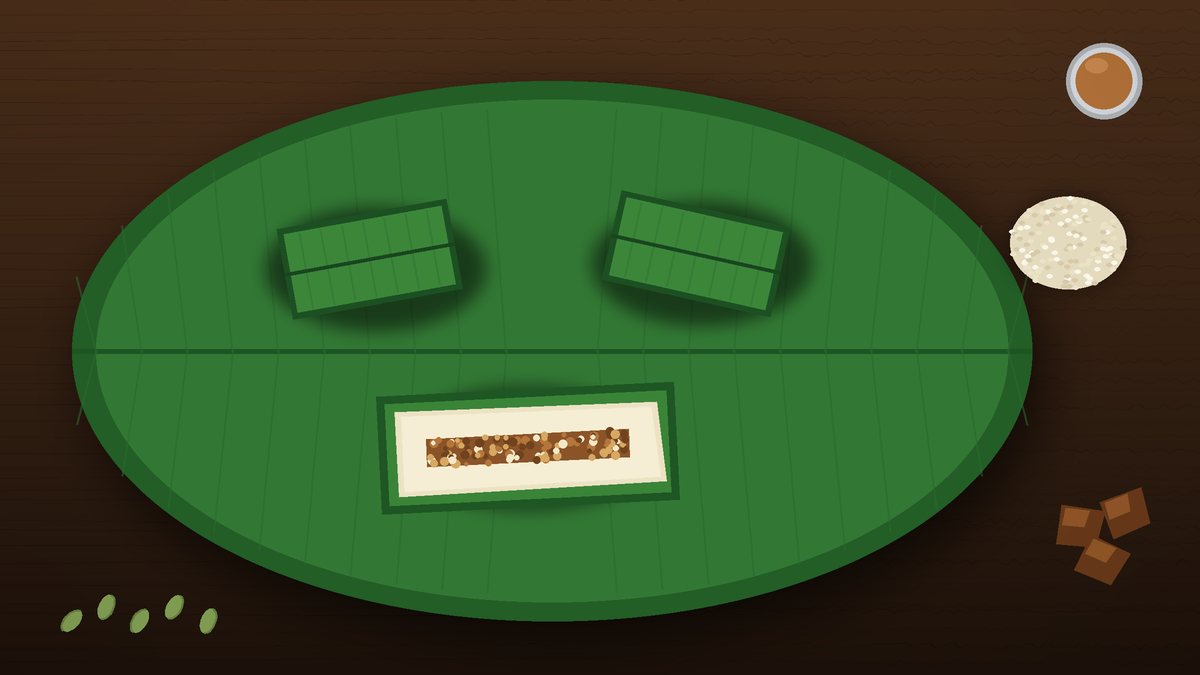
The short answer: Ela ada (also written ila ada or elayada) is a Kerala sweet made of a thin layer of rice dough spread on a banana leaf, filled with grated coconut and jaggery, folded into a parcel and steamed for about 15 minutes. The leaf gives the dough its smell, and the filling is the same coconut-jaggery-cardamom mix used in many Kerala sweets. This version serves four, takes about 45 minutes in total, and is naturally gluten-free.
Ela ada is one of those snacks that sits between a festival offering and an ordinary tea-time treat. Wikipedia describes it as a rice-parcel sweet served in Kerala and parts of Karnataka, Konkan and Tamil Nadu, eaten as an evening snack or at breakfast, and usually prepared on Onam. It is also given as prasadam in temples in Kerala. If you have already tried our vattayappam, you will notice the difference at once: vattayappam is a fermented, fluffy steamed cake, while ela ada is a thin, soft, slightly chewy sheet of unfermented rice dough wrapped around a sweet filling. There is no yeast and no waiting.
What ela ada is, and what it is not
The name simply means leaf (ela) and ada (a flat steamed rice sweet). Three things define it:
- A thin rice-flour layer. The dough is spread by hand directly on the leaf, as thin as you can make it without tearing.
- A coconut and jaggery filling. Fresh grated coconut cooked briefly with melted jaggery and cardamom, thick but not dry.
- Steaming in the leaf. No oil, no frying. The banana leaf is part of the flavour, not just the wrapping.
It should not be confused with the dried rice ada flakes used in ada pradhaman, which are a different product that is cooked later in milk or coconut milk. Wikipedia also lists related versions: poovada, made in the tip of the plantain leaf as an Onam offering with a sprinkle of thumba flowers, and ottada, a spicy breakfast version cooked on a pan.
Ingredients (serves 4, makes 8 to 10 small adas)
For the filling
- 1 cup freshly grated coconut
- 5 to 6 small cubes of jaggery (about 80 to 100 g), melted in ½ cup of water
- 4 to 5 cardamom pods, freshly crushed
- 1 to 2 tsp ghee
For the dough
- 1 cup fine rice flour (a pathiri or idiyappam-type flour works best)
- 1½ cups water
- 1 pinch salt
- 1 tsp coconut oil
For assembly: 8 to 10 pieces of banana leaf, roughly 20 by 25 cm each, and a little ghee or coconut oil for smearing.
Method
- Prepare the leaves. Wash the banana leaf and wipe it dry with a clean cloth. Pass it briefly over a low flame or hold it over steam for a few seconds so it turns pliable and does not split when folded. Cut into rectangles.
- Make the filling. Melt the jaggery in the water over low heat, then strain to remove any grit. Return it to the pan, add the grated coconut and stir on low heat until the mixture thickens. Stir in the cardamom and ghee at the end. It should hold together on a spoon, not be wet and not be hard. Cool completely.
- Cook the dough. Whisk the rice flour, water, salt and coconut oil until smooth. Cook on low to medium heat, stirring continuously, until most of the water has evaporated and the dough comes together into a soft mass. This is the step that makes the dough spreadable. Cover it and keep it warm.
- Spread. Smear a leaf lightly with ghee. Take a golf-ball portion of the warm dough and spread it with wet fingertips into a thin, even layer over one half of the leaf. Keep a bowl of water beside you and dip your fingers whenever the dough sticks.
- Fill and fold. Put 1 to 2 teaspoons of filling along the centre of the dough, keeping it away from the edges. Fold the leaf in half like a parcel and press the edges gently so the filling stays inside.
- Steam. Arrange the parcels in a steamer in a single layer or loosely stacked so that steam can circulate. Steam over high heat for about 15 minutes.
- Rest and serve. Turn off the heat and let the pot stand for a few minutes. Take the parcels out while still warm, open the leaf and eat straight away.
Why ela ada goes wrong: a short fix list
- Hard, dry ada. Usually too little water in the dough or too long in the steamer. Cook the dough only until it holds together, and stop steaming at about 15 minutes.
- Dough tears when spread. It has cooled and hardened. Keep it covered and warm, and work with small portions at a time.
- Filling leaks. Too much filling, or too close to the edge. One to two teaspoons is enough for a small parcel.
- Leaf splits when folded. It was not wilted. A few seconds over a flame or steam fixes this.
- Pale taste. The leaf was not fragrant, or the coconut was not fresh. Fresh coconut and a fresh leaf make most of the difference.
Variations worth trying
- Chakkavaratti ela ada. Fill with jackfruit preserve when it is in season. Wikipedia lists this as a traditional filling.
- Banana ela ada. Add mashed ripe banana to the coconut-jaggery filling for extra softness and sweetness.
- Aval filling. Mix flattened rice (aval) into the coconut-jaggery filling for a different texture.
- Ragi ela ada. Replace part of the rice flour with ragi flour for a darker, earthier dough.
- Boiling-water dough. Some home cooks skip cooking the dough on the stove. They pour boiling water over fine rice flour with a little salt and ghee, mix and knead it while still hot. If you use this method, add the water gradually because different flours absorb differently.
- No banana leaf. Steaming on parchment paper or turmeric leaves works, but you will lose the aroma that makes the dish.
When to serve it and what goes with it
Serve ela ada warm with a cup of Kerala tea or filter coffee as an evening snack. It also works as a sweet at breakfast, and it appears among the offerings in Kerala temples, in particular in Krishna and Ganapathy temples according to one traditional-recipe writer. If you are planning a festive meal, it sits well next to the lighter sweets from a sadya, though in a full sadya the leaf is laid out with its own order, as in our banana leaf serving guide. For another small sweet from the same kitchen, see unniyappam.
Storage and reheating
Ela ada is best eaten fresh. Leftovers keep in an airtight container in the fridge for up to 3 days, and steaming for 3 to 5 minutes brings back the soft texture. The same source says the parcels can be frozen for up to 2 months and steamed from thawed. Cold ada turns firm, so do not eat it straight from the fridge.
Frequently asked questions
Is ela ada healthy?
It is steamed rather than fried, uses no refined flour, and is naturally gluten-free when made with plain rice flour. It is still a sweet, so the sugar comes from the jaggery. Eat it as a snack, not as a meal.
Can I make ela ada without jaggery?
Yes. Some cooks use coconut sugar instead, which gives a slightly different flavour and a lighter colour. White sugar works but loses the deeper taste that jaggery gives.
Which flour should I use?
A fine, lightly roasted rice flour sold as pathiri, idiyappam or ada podi gives the softest result. Coarse puttu flour is too grainy for a thin layer.
Why does my ela ada stick to the leaf?
The leaf was not greased, or the ada was left to go cold on it. Smear the leaf with a little ghee before spreading and open the parcels while they are still warm.
Is ela ada the same as kozhukkatta?
No. Kozhukkatta is a rice-flour dumpling shaped by hand, with a similar filling. Ela ada is spread flat on a leaf and steamed folded.
Sources
- Ada (food) (Wikipedia): names, regions, Onam and temple use, poovada, ottada and chakkavaratti fillings.
- Ela Ada, Steamed rice sweet (Elephants and the Coconut Trees): cooked-dough method, 15-minute steaming, variations, storage and reheating, and temple offering notes.
Looking for more steamed and festive sweets? Start with the vattayappam recipe and the palada payasam.