Kerala Moru Curry: Spiced Buttermilk Curry for Rice
How to make Kerala moru curry (moru kachiyathu) at home: sour curd whisked smooth, warmed gently with ginger, green chilli and shallots, never boiled, then finished with a coconut-oil tempering, plus fixes for a split or bitter curry.
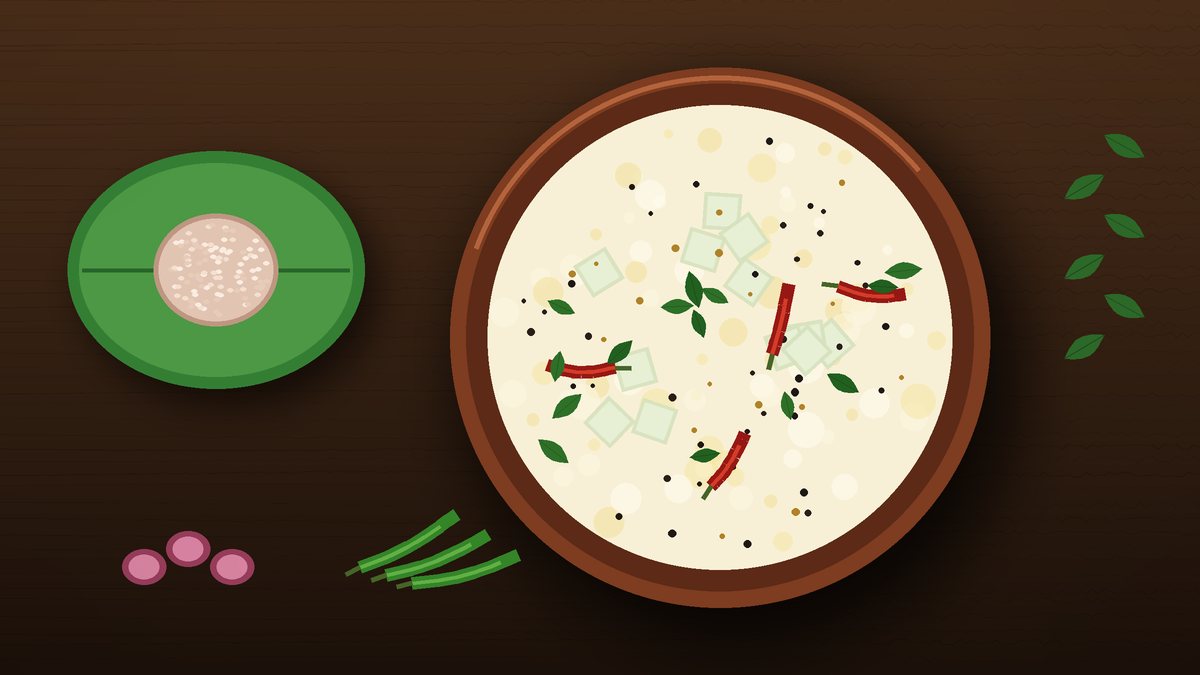
The short answer: Kerala moru curry (also called moru kachiyathu) is a mild, tangy buttermilk curry. Slightly sour curd is whisked with water, turmeric and salt, warmed very gently with crushed ginger, green chilli and shallots, and finished with a coconut-oil tempering of mustard seeds, fenugreek, dried red chillies and curry leaves. For four people you need about 400 g of thick sour curd, 250 ml of water and 20 minutes. One rule decides whether it works: warm the buttermilk until it steams, but never let it boil, or it splits into grainy curds and watery whey.
It is the quickest curry in the Kerala kitchen, and the one that rescues a hot day. Nothing is fried in advance, there is no tamarind and no chilli powder, and a pot that looks plain on the stove ends up as the dish people take second helpings of. Kerala Piravi, the state's formation day, falls on Sunday 1 November this year, which is a natural excuse for a small home sadya lunch. Moru curry is one of the easiest dishes to add to that spread.
At a glance
- Serves: 4 as a side with rice
- Time: about 20 minutes, no pre-soaking or grinding needed
- Heat level: mild to medium (green chilli and a little dried red chilli)
- Texture: thin, pourable, like a savoury soup rather than a gravy
- Serve with: hot rice, a dry vegetable and a pickle
Moru curry, pulissery and kalan: what is the difference?
Kerala has several curd-based curries and the names overlap, so it helps to separate them. Moru curry or moru kachiyathu is, roughly, "heated buttermilk" in everyday Malayalam. It is thin and seasoned lightly, and it is what most Malayali homes put on the table on an ordinary weekday. Pulissery is the fuller version: sour curd or buttermilk combined with a ground paste of coconut, cumin, turmeric and green chilli, and finished with a tempering of mustard, fenugreek, dried red chilli and curry leaves. Wikipedia notes that in several regions pulissery variants are also called moru curry, which is why you will see the two names used for each other. Kalan is thicker still, usually made with raw plantain or yam and a lot more curd. This post covers the light, everyday moru curry, with an optional coconut paste if you want it closer to pulissery.
Do not confuse any of these with sambharam or moru the drink. That is salted buttermilk with green chilli, ginger and curry leaves, drunk near the end of a sadya to help digestion. Moru curry is eaten with rice, and it is cooked.
Ingredients
For the buttermilk base
- 400 g (about 1 3/4 cups) thick, slightly sour curd, full-fat if possible
- 250 ml (1 cup) water, or a little more for a thinner curry
- 1/4 tsp turmeric powder
- 3/4 tsp salt, adjusted at the end
- 1 small piece ginger (about 1 inch), crushed
- 2 green chillies, slit or crushed
- 4 shallots, thinly sliced (or 1/2 small onion)
- 1 sprig curry leaves
For the tempering
- 1 1/2 tbsp coconut oil
- 1/2 tsp mustard seeds
- 5 to 6 fenugreek seeds (a pinch, no more)
- 2 dried red chillies, broken
- 1 sprig curry leaves
Optional vegetables and coconut paste
- 200 g ash gourd, cucumber (vellarikka), okra or ripe plantain, cut into small pieces
- For the pulissery-style version: 1/4 cup grated coconut, 1/2 tsp cumin and 1 green chilli ground to a smooth paste
How to make Kerala moru curry
- Whisk the curd. Put the curd in a bowl, add the water, turmeric and salt, and whisk until completely smooth with no lumps. This matters more than any other step: lumps of curd are the ones that turn grainy on heat.
- Soften the aromatics. In a wide pan, warm 1 teaspoon of coconut oil on low heat. Add the crushed ginger, green chillies, shallots and the first sprig of curry leaves. Stir for 2 minutes until the shallots turn glossy and soft. Do not let them brown, because browned onions turn the curry beige and sweet.
- Add vegetables if you are using them. Ash gourd or okra pieces go in now with 3 to 4 tablespoons of water. Cover and cook until just tender, about 6 to 8 minutes. For cucumber, skip this step and add it straight to the buttermilk.
- Add the buttermilk and the paste. Turn the heat to its lowest setting, pour in the whisked curd and add the coconut paste if you are using it. Stir slowly and continuously.
- Warm gently. Heat for 5 to 7 minutes, until the surface steams and tiny bubbles show at the edge of the pan. Switch off the heat at once. If it reaches a rolling boil, it has gone too far.
- Temper separately. In a small pan, heat the remaining coconut oil. Add the mustard seeds and let them pop, then the fenugreek, dried red chillies and second sprig of curry leaves. Fry for 10 to 15 seconds, only until the fenugreek turns light gold. Burnt fenugreek makes the whole pot bitter.
- Finish. Pour the hot tempering over the curry, cover the pot and leave it for 10 minutes so the flavours settle. Taste and adjust the salt.
Getting the curd right
The curd decides the flavour. Use curd that is one to two days old and pleasantly sour, not fresh and sweet. If your curd is too fresh, leave it on the counter for a few hours in warm weather before using it. If it is very sour, add an extra 50 ml of water. Packet curd from the shop works well as long as it is full-fat, because low-fat curd tends to split more easily on heat.
A common cook's trick for a steadier curry is to whisk one teaspoon of rice flour into the cold buttermilk before it goes on the heat. It thickens the base slightly and many home cooks find it helps the curry stay smooth. It is optional, and the low-heat rule matters more.
Fixing common problems
- The curry split or looks grainy. It got too hot. Take it off the heat, add a splash of cold water and whisk hard. The texture will not be perfect, but the flavour is fine and it is still good over rice.
- It tastes flat. It needs more salt or more sourness. Add a little extra curd, or a squeeze of lime off the heat.
- It tastes bitter. The fenugreek burned. Use only a pinch next time and take the pan off the heat the moment the seeds turn golden.
- It is too thin or too thick. Moru curry is meant to be thin, but you can whisk in two tablespoons more curd for body, or a little water to loosen it.
- Vegetables went mushy. Cook them in the small amount of water first and stop as soon as they are tender. They carry on softening in the hot buttermilk.
What to serve with moru curry
Moru curry belongs on a plate of rice with something dry and something spicy beside it. A bowl of parippu curry and a spoon of cabbage thoran make a complete everyday lunch. For a fuller meal, add avial and erissery, and finish with palada payasam. If you are planning a larger spread, the Kerala sadya menu guide shows where each dish sits on the leaf. In a traditional sadya, Wikipedia notes, buttermilk is served towards the end of the meal, so moru curry fits the same slot.
It pairs best with crisp, salty sides: banana chips and a fiery fish dish such as Kerala meen curry balance its cool tang. Because moru curry is mild and cooling, it also takes the edge off a spicy meal.
Storing and reheating
Cool the curry and refrigerate it within two hours. It keeps for up to 2 days in a covered container. Moru curry tastes best fresh, because the tempering fades as it sits. Reheat only on very low heat, stirring constantly, and stop the moment it is warm. Do not boil it again, and do not freeze it: the curd separates when it thaws.
FAQ
Can I make moru curry without coconut?
Yes. The plain version in this recipe has no coconut at all, and that is how many Kerala homes make it every day. Add the coconut paste only if you want it richer and closer to pulissery.
Is moru curry the same as buttermilk?
No. The drink called moru or sambharam is cold, salted buttermilk with ginger, green chilli and curry leaves. Moru curry is warmed, seasoned with turmeric and a coconut-oil tempering, and eaten with rice.
Why did my moru curry curdle?
The heat was too high, or the curd was not whisked smooth. Always warm it on the lowest setting, stir continuously and stop as soon as steam rises. Full-fat curd is also much less likely to split.
Which vegetables work best?
Ash gourd, cucumber, okra and ripe plantain are the classics. Ripe mango or pineapple gives the sweeter pulissery used in sadya. Choose one vegetable, not several, so the flavour stays clean.
Sources
- Wikipedia, Pulissery (curd or buttermilk curry, coconut-cumin paste, mustard and fenugreek tempering, moru curry as a regional name)
- Wikipedia, Sadya (the Kerala feast, buttermilk served near the end of the meal, sambharam)
- Video credit above: Shaan Geo on YouTube (a no-coconut moru kachiyathu method)