
Achappam Recipe: Crisp Kerala Rose Cookies at Home
How to make crisp, lacy achappam (Kerala rose cookies): a thin rice flour and coconut milk batter, a mould heated in the oil before every dip, the three-quarter dip rule, and fixes for cookies that stick, break or turn soft.
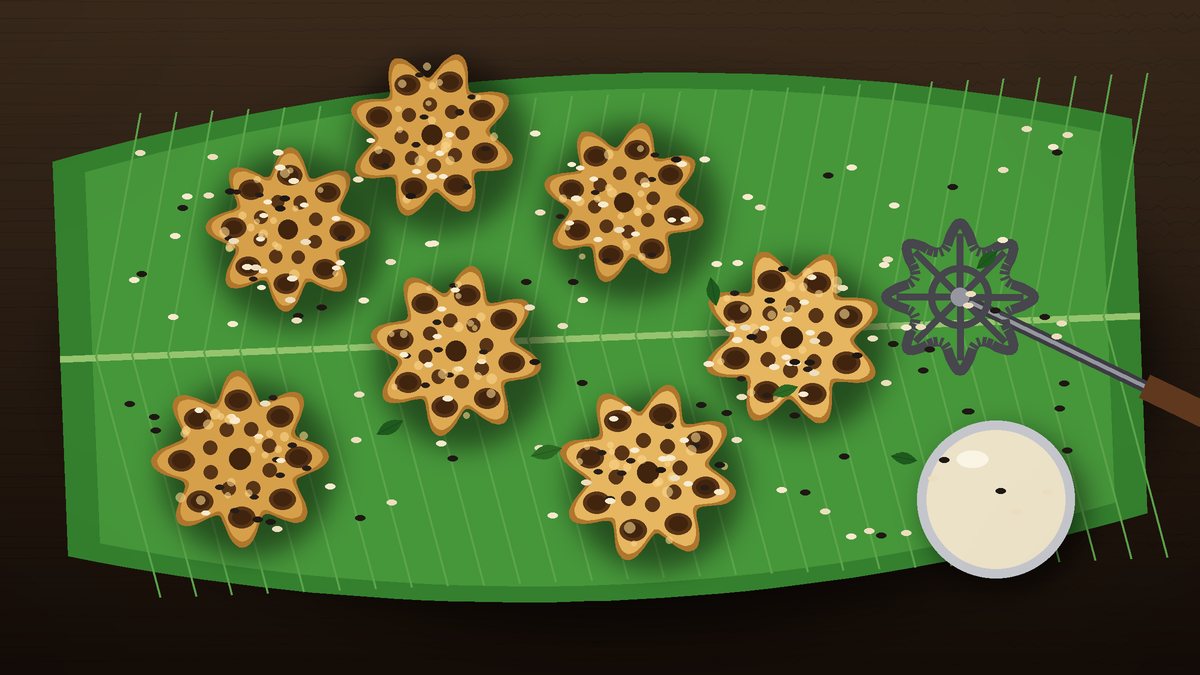
The short answer: Achappam, or Kerala rose cookies, are made by dipping a hot flower-shaped iron mould into a thin batter of rice flour, coconut milk, egg and a little sugar, then lowering it into hot oil until the batter sets and slides off as a crisp, lacy rosette. For about 35 crisp achappams you need 1 cup of fine rice flour, 1 egg, 1/4 cup sugar and roughly 3/4 to 1 cup of coconut milk. The two things that decide success are batter consistency (like thin pouring cream) and a mould that is properly heated in the oil before every dip.
In Malayalam, achu means mould and appam is a flour-based snack, which is exactly what this is. In Tamil Nadu the same cookie is called achu murukku. Many Kerala Christian homes fry big batches of achappam before Christmas because, once cooled, they stay crisp for weeks in an airtight tin. That makes this a good snack to practise now, well before the festive rush.
At a glance
- Makes: about 35 to 40 achappams
- Time: 10 minutes to mix, 30 minutes resting, about 40 minutes frying
- Equipment: an achappam (rosette) mould with a long handle, a small deep pan or kadai, a slotted spoon or fork
- Texture: thin, crisp and lightly sweet, with a gentle coconut flavour
- Keeps: 2 to 3 weeks in an airtight container
How achappam differs from other rosette cookies
Rose cookies are not unique to Kerala. Scandinavia, Iran, Turkey and Sri Lanka all have rosette fritters made with a similar long-handled iron, and in South-East Asia the same shape is sold as kuih loyang or kembang goyang. Most European rosettes use wheat flour and dairy milk. The Kerala version uses rice flour and coconut milk, which gives a lighter, more brittle crunch and that unmistakable coconut aroma. Many writers link its arrival in Kerala to Dutch traders, and it has been a Syrian Christian and Anglo-Indian festive snack for generations.
Do not confuse it with kuzhalappam, another Christmas snack. Kuzhalappam is made from a rice-flour dough with coconut, shallots and garlic, rolled thin and shaped into tubes by hand. Achappam is a batter, and the mould does the shaping.
Ingredients
- 1 cup (about 150 g) fine rice flour, roasted or store-bought (the fine type sold for idiyappam or pathiri works well)
- 2 tbsp all-purpose flour (maida), optional, for a sturdier cookie
- 1 large egg
- 1/4 cup (50 g) sugar, or up to 1/3 cup if you like them sweeter
- 3/4 to 1 cup (180 to 240 ml) medium-thick coconut milk
- 1 tsp black or white sesame seeds
- 1/4 tsp cumin seeds or a pinch of cardamom powder (optional)
- A pinch of salt
- Coconut oil or any neutral oil for deep frying, enough to fill your pan about 3 inches deep
About the coconut milk: fresh first-and-second-press milk mixed together is ideal. Canned coconut milk works if you thin it with an equal amount of water, because canned milk is much richer and makes the batter too heavy to coat the mould thinly.
Step-by-step method
1. Make a smooth batter
Beat the egg and sugar together in a bowl until the sugar mostly dissolves. Add the rice flour, maida (if using), salt and about 3/4 cup coconut milk. Whisk until there are no lumps at all. Lumps tear the lace pattern, so if you see any, pass the batter through a sieve. Stir in the sesame seeds and cumin.
2. Check the consistency
This is the most important step. The batter should coat the back of a spoon in a thin, even layer and run off slowly, like pouring cream or a thin dosa batter. If it is thick like idli batter, the cookies turn hard and doughy. If it is watery, it will not cling to the mould. Add coconut milk a tablespoon at a time to thin it, or a spoon of rice flour to thicken it.
3. Rest the batter
Cover and leave it for 30 minutes to an hour. Rice flour absorbs liquid as it sits, so check the consistency again before frying and add a splash of coconut milk if it has thickened.
4. Heat the oil and the mould together
Pour oil into a small, deep pan so the mould can be fully submerged. Put the mould into the cold oil and heat both together over medium heat for 4 to 5 minutes. The oil should be around 170 to 180°C: a drop of batter should rise to the surface and sizzle steadily within a couple of seconds, without browning instantly.
5. Dip, never drown
Lift the hot mould, let the excess oil drip off for a second, and dip it into the batter only three-quarters of the way up. You will hear a soft sizzle as the batter sets on the hot metal. Never let the batter cover the top of the mould. If it does, it wraps over the edge and the cookie cannot slide off.
6. Fry and release
Lower the coated mould straight into the hot oil and hold it there. After 5 to 10 seconds the achappam will start to loosen. Shake the handle gently up and down and it will drop off into the oil. If it clings, ease it off with a fork or a toothpick. Fry for another 30 to 60 seconds, turning once, until it is pale golden. Achappam should be light gold, not brown.
7. Drain and repeat
Lift it out with a slotted spoon and stand it on its edge on paper towels or in a colander so the oil drains from the grooves. Put the mould back into the oil for a few seconds to reheat it before the next dip. Every dip needs a hot mould. Stir the batter every few minutes because the rice flour settles at the bottom.
Why achappam stick, break or turn soft (and how to fix it)
- Batter will not stick to the mould: the mould is either too cold or far too hot. If the batter slides straight off with a loud hiss, let the mould cool for a few seconds before dipping. If it barely sticks and drips, put the mould back in the oil for longer.
- Cookie will not come off the mould: usually the batter went over the top of the mould, the batter is too thick, or the mould is new and not seasoned. Dip less deeply, thin the batter, and see the seasoning tip below.
- Soft or chewy achappam: the batter is too thick, the oil is not hot enough, or you stored them before they cooled completely. Re-crisp soft ones in a 150°C oven for 5 minutes and cool them fully.
- Oily cookies: the oil temperature has dropped. Fry one at a time and let the oil come back up to heat between batches.
- Browning too fast: too much sugar or the oil is too hot. Lower the heat slightly. Sugar caramelises quickly, so a darker cookie can taste bitter.
- Broken edges: the batter has lumps, or you are shaking the mould too hard. Strain the batter and give the handle short, gentle shakes.
Seasoning a new achappam mould
A brand-new mould almost always sticks for the first few cookies. Wash and dry it, then either leave it soaked in oil overnight or heat it in a pan of oil for 10 minutes before you start. Fry two or three test cookies and throw them away if they stick; after that the mould releases cleanly. Never scrub a seasoned mould with soap. Wipe it with paper while it is still warm and store it dry. Cast iron and brass moulds hold heat best; thin aluminium ones cool quickly, so they need longer in the oil between dips.
Eggless achappam
The egg helps the batter cling and gives a lacy crispness, but you can skip it. Use the 2 tbsp maida (or add 2 tbsp more rice flour) and replace the egg with an extra 3 to 4 tbsp coconut milk. Rest the batter for a full hour. Eggless achappam are a little denser and need slightly longer in the oil to crisp up.
Storing achappam
Let every cookie cool completely, at least 30 minutes, before you store them. Any warmth trapped in the tin turns into moisture and softens the whole batch. In an airtight steel tin or glass jar they stay crisp for 2 to 3 weeks. In humid weather, keep the container closed tightly and take out only what you need.
What to do with the frying oil
Achappam take a lot of oil, and it is tempting to reuse it for weeks. India's food regulator FSSAI sets a limit of 25 percent total polar compounds in frying oil; beyond that, the oil must not be used, and its RUCO programme collects used cooking oil from businesses for biodiesel. At home you cannot measure this, so use common sense: strain the oil after frying, store it covered, use it once or twice more for regular cooking, and throw it away if it turns dark, thick, foamy or smoky.
More Kerala snacks and Christmas favourites
If you are making a snack tin, pair achappam with crunchy Kerala banana chips and soft unniyappam. For tea-time, try warm pazham pori. And for the classic Kerala Christmas breakfast, serve lacy appam with chicken stew.
Frequently asked questions
What is achappam called in English?
Rose cookies or rosette cookies. The name comes from the flower-shaped mould. In Tamil Nadu it is called achu murukku.
Can I use raw rice instead of rice flour?
Yes. Soak 1 cup raw rice for 4 hours, drain, and grind it very fine with the coconut milk, then add the egg, sugar and seeds. Strain the batter well. This is the traditional method and gives a very crisp cookie, but the batter must be perfectly smooth.
Why are my achappam not crispy?
Most often the batter is too thick or the oil is not hot enough. Thin the batter with a spoon of coconut milk, keep the oil steady at a medium-high heat, and cool the cookies fully before storing.
Is achappam the same as kuzhalappam?
No. Both are Kerala Christmas snacks, but achappam is a sweet batter shaped by a mould, while kuzhalappam is a savoury-sweet rice dough with coconut, shallots and garlic, rolled into tubes by hand.
Sources
- Wikipedia, Achappam: name meaning (achu = mould), rice flour, coconut milk, sugar and egg batter, the hot-iron method, and the belief that it came through Dutch influence.
- Wikipedia, Rosette (fritter): rosette irons and related cookies in Scandinavia, Iran, Turkey and Sri Lanka.
- FSSAI Eat Right India, RUCO: Repurpose Used Cooking Oil: the 25 percent total polar compounds limit for frying oil.