Kerala Fish Molee: Mild Fish Stew in Coconut Milk
How to make Kerala fish molee at home: firm fish lightly fried, simmered in thin coconut milk with onion, ginger, green chilli and pepper, then finished with thick milk and vinegar without boiling, plus fixes for split gravy and broken fish.
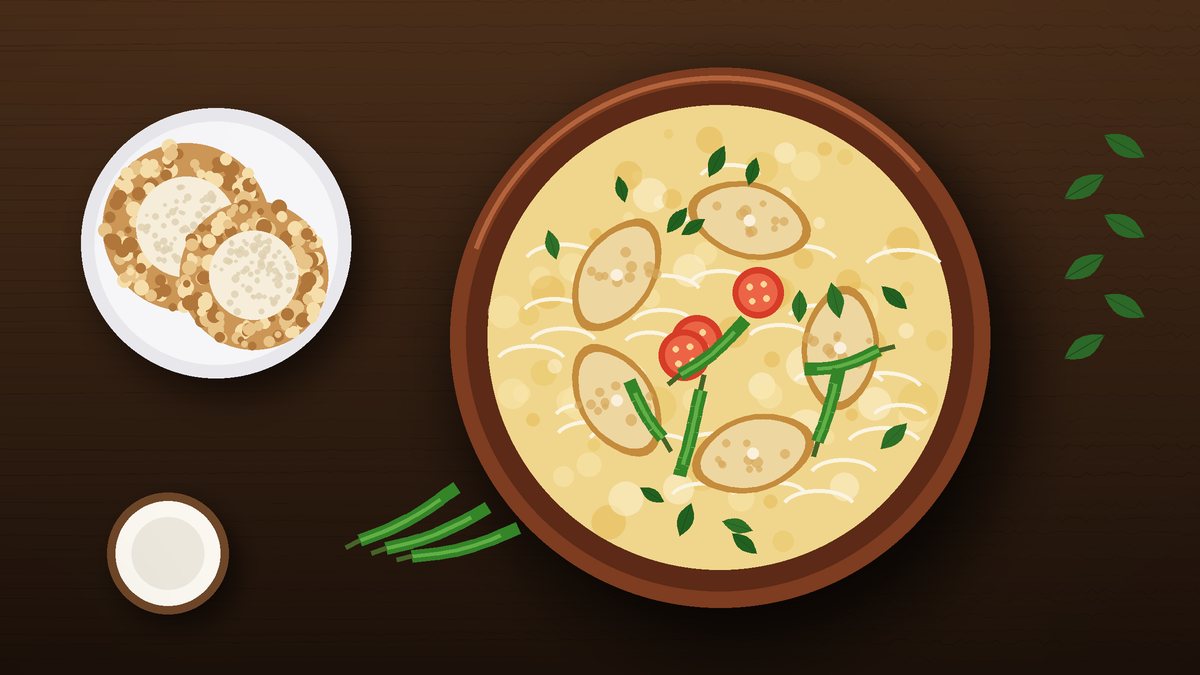
The short answer: Kerala fish molee (also spelt moilee or molly) is a gentle fish stew. Lightly fried fish steaks simmer in thin coconut milk with sliced onion, ginger, garlic, green chillies, curry leaves, turmeric and black pepper, and the stew is finished with thick coconut milk and a dash of vinegar. For four people you need about 500 g of firm fish, the milk of one coconut (or a 400 ml can) and around 35 minutes. One rule decides whether it works: once the thick coconut milk goes in, the pot must never come to a rolling boil, or the gravy splits.
Molee is the opposite of the fiery red Kerala meen curry soured with kudampuli. It has no red chilli powder and no tamarind. The heat comes only from green chillies and pepper, so the gravy stays pale yellow and silky. Kerala families make it when guests, children or anyone who cannot take much spice is at the table. Kerala Piravi, the state's formation day, falls on 1 November, so this is also a good choice if you want one classic coastal dish on a home menu that everyone can eat.
At a glance
- Serves: 4
- Time: 15 minutes marinating, about 30 minutes cooking
- Heat level: mild (green chilli and black pepper only)
- Best fish: seer fish (neymeen), pomfret, pearl spot (karimeen), mullet or red snapper
- Serve with: appam, idiyappam or plain steamed rice
Where the name comes from
Nobody has settled the history of the word. The story told most often is that Portuguese officials found the local fish curries too hot, so a cook remembered as "Molly" swapped red chillies for green ones and calmed the curry down with coconut milk. The softened dish then carried her name. It is a legend rather than a record, and coconut-milk stews were already part of Kerala's coastal cooking. What is certain is that molee belongs to the Christian kitchens of central Kerala, where it is served with lacy appam at weddings, Christmas and Easter. Kerala Tourism's own fish moilee recipe follows the same core method as this one: marinate, shallow-fry, then simmer in coconut milk.
Choosing the fish
Molee needs fish that holds its shape in a liquid gravy. Thick steaks of seer fish (neymeen) are the classic restaurant choice. Pomfret and pearl spot make a sweeter, more delicate stew. If you buy karimeen, keep a couple aside for karimeen pollichathu another day. Mullet, red snapper and barramundi (koduva) also work. Avoid sardine and mackerel here: their strong, oily flavour overpowers the mild coconut base. Save them for a masala fish fry instead.
Cut the fish into steaks or large pieces about 2 to 2.5 cm thick. Thin fillets break up as soon as you stir. Frozen fish is fine: thaw it in the fridge, never on the counter, and pat it very dry before marinating so it browns instead of steaming.
Ingredients
For the marinade
- 500 g firm fish steaks, cleaned
- 1/2 tsp turmeric powder
- 1 tsp freshly crushed black pepper
- 3/4 tsp salt
- 1 tsp lime juice
For the molee
- 3 tbsp coconut oil (1 1/2 tbsp for frying the fish, the rest for the gravy)
- 1/2 tsp mustard seeds
- 1 small stick cinnamon, 3 cloves and 2 green cardamom pods (optional, used in many Kochi homes)
- 2 medium onions, thinly sliced (about 1 1/2 cups)
- 1 tbsp ginger, cut into thin matchsticks
- 6 to 8 garlic cloves, thinly sliced
- 4 to 5 green chillies, slit lengthwise (use 2 for children)
- 2 sprigs curry leaves
- 1/4 tsp turmeric powder
- 1 tsp black pepper powder
- 1 tsp coriander powder (optional, see step 3)
- 1 1/2 cups thin coconut milk (second extract)
- 3/4 to 1 cup thick coconut milk (first extract)
- 1 small tomato, sliced into rounds (optional, for colour and a mild tang)
- 1 to 2 tsp mild vinegar, or 1 tsp lime juice
- Salt to taste
Coconut milk from a can: shake a 400 ml can well. Use half of it as the thick milk, and mix the other half with 3/4 cup water to make the thin milk. Fresh milk squeezed from a grated coconut tastes cleaner and sweeter, but canned milk still makes a good molee on a weeknight.
Method
1. Marinate (15 minutes)
Rub the fish with turmeric, pepper, salt and lime juice. Leave it for 15 to 30 minutes. Longer is not better: lime juice starts to "cook" the surface and makes it chalky.
2. Shallow-fry lightly
Heat 1 1/2 tbsp coconut oil in a wide, heavy pan on medium-high. Fry the steaks for about 1 1/2 minutes per side, just until the outside turns opaque with a few golden spots. The aim is not to cook them through but to firm the surface so the pieces survive the gravy. Lift them onto a plate. Many homes skip this step for a softer, more delicate stew, which works with very fresh, firm fish. If you are new to the dish, frying is the safer route.
3. Build the base
In the same pan (or a wide clay manchatti), add the remaining oil. Splutter the mustard seeds, then add the whole spices if using. Add the onion, ginger, garlic, green chillies and one sprig of curry leaves. Cook on medium for 5 to 6 minutes until the onions are soft and translucent but not browned. Browned onion turns the gravy beige and adds a sweetness that does not belong in molee. Stir in the turmeric and pepper powder and cook for 30 seconds. Kerala Tourism's version also roasts some coriander and fenugreek powder at this point. Add a teaspoon of coriander powder here if you want a more savoury, slightly deeper-coloured gravy.
4. Simmer in thin coconut milk
Pour in the thin coconut milk, add salt and bring it to a gentle boil. Simmer for 3 to 4 minutes so the onions flavour the liquid. Slide the fish pieces in a single layer and lay the tomato slices on top. Cover and cook on low for 6 to 8 minutes; very thick steaks may need up to 12. Do not stir with a spoon. Hold the pan by its handles and swirl it gently so the gravy moves around the fish.
The fish is done when the flesh is opaque all the way through and separates easily with a fork. FoodSafety.gov gives 63°C (145°F) as the safe internal temperature for fish, a useful check if you have a thermometer and are cooking thick steaks.
5. Finish with thick coconut milk
Turn the heat to the lowest setting. Pour in the thick coconut milk and the vinegar, swirl the pan, and heat for 1 to 2 minutes, only until you see the first small bubbles at the edge. Switch off the heat before it boils. Add the second sprig of curry leaves and, if you like, a teaspoon of raw coconut oil over the top. Cover and rest for 15 minutes. The fish soaks up the gravy and the flavour deepens noticeably.
Why molee splits, and how to prevent it
Coconut milk is an emulsion of fat and water held together by proteins. A hard boil breaks that emulsion, and acid makes it break faster. That is why the vinegar goes in with the thick milk on low heat, never at a full boil. If the gravy splits, with oily specks over a thin watery layer, take the pan off the heat, add 2 to 3 tbsp of cold thick coconut milk and swirl. It will look less glossy, but it will taste the same.
Common problems and fixes
- The fish broke into flakes: the pieces were too thin, stirred with a spoon or simmered too long. Use thick steaks, swirl the pan and check at 6 minutes.
- The gravy tastes flat: it usually needs salt and a little more acid. Add salt first, then vinegar a quarter teaspoon at a time.
- The gravy is too thin: leave the lid off for the last few minutes of the thin-milk stage, before the thick milk goes in. Do not thicken it with flour.
- The gravy is too thick after resting: loosen it with a few spoons of warm thin coconut milk or water and heat gently.
- It tastes of raw garlic or ginger: the onion base was rushed. Give it the full 5 to 6 minutes on medium before the milk goes in.
Molee, meen curry and mappas: what is the difference?
Kerala has several fish curries, and they are easy to confuse:
- Fish molee: pale yellow, made with coconut milk, green chilli, pepper and a touch of vinegar. Mild and creamy.
- Meen curry (Kottayam style): red, made with Kashmiri chilli and kudampuli (Malabar tamarind), usually without coconut milk. Sharp, spicy and even better the next day.
- Fish mappas: also finished with coconut milk, but built on a fried paste of chilli and coriander powder, so it is darker, spicier and more aromatic.
If you already cook Kerala chicken stew, you will recognise molee straight away. It uses the same onion, ginger and green chilli base and the same thin-then-thick coconut milk technique, adapted for fish.
Variations
- Prawn molee: use 400 g cleaned prawns and skip the frying. Simmer them in the thin milk for only 3 to 4 minutes before adding the thick milk, because overcooked prawns turn rubbery.
- Without frying: marinate as above, then add the raw steaks straight to the thin coconut milk and simmer 2 to 3 minutes longer. The stew is lighter and softer, but the pieces break more easily.
- Lighter version: use 1 cup thick milk diluted with 1/2 cup water instead of separate extracts, and fry the fish in a non-stick pan with 2 tsp oil.
What to serve with fish molee
The classic pairing is soft, lacy appam, whose spongy centre soaks up the gravy. Idiyappam is just as good. For a full lunch, serve it with plain matta rice and a dry vegetable such as cabbage thoran. Because the stew is mild, a crisp fried side suits the same meal, as long as it is not another coconut gravy.
Storing and reheating
Cool the molee and refrigerate it within two hours of cooking. It keeps for up to 2 days in a covered container. Reheat it gently on low heat, swirling rather than stirring, and stop as soon as it is steaming hot, because boiling it again will split the coconut milk. Molee does not freeze well: the coconut milk turns grainy when it thaws.
FAQ
Is fish molee spicy?
No. It is one of the mildest Kerala curries. The only heat comes from green chillies and black pepper, and you can use less of both without losing the character of the dish.
Can I make molee without vinegar?
Yes. Add a teaspoon of lime juice off the heat, or simmer a few tomato slices in the gravy. You need a little acidity to balance the richness of the coconut milk.
Which oil should I use?
Kerala cooks use coconut oil for both frying and tempering, and a little raw oil spooned on top at the end gives the familiar aroma. Any neutral oil will do if that is what you have.
Why did my molee turn grey or brown?
Either the onions browned or too much pepper or garam masala went in. Keep the onions soft and pale and stick to the quantities above, and the gravy will stay a light, creamy yellow.
Sources
- Kerala Tourism, Fish Moilee recipe (fish choice; marinate, shallow-fry and coconut-milk method)
- Kerala Tourism, Fish Mappas (for the comparison above)
- Gulf News, The Portuguese reason for Kerala fish molee (the "Molly" naming legend)
- FoodSafety.gov, Safe minimum internal temperatures (63°C / 145°F for fish)