Vattayappam: Soft Kerala Steamed Rice Cake with Rice Flour
How to make vattayappam, the soft, lightly sweet Kerala steamed rice cake: rice flour, coconut, sugar and yeast, a 3 to 4 hour rise and 25 minutes in the steamer, plus batter thickness, fixes for dense or sunken cakes and storage tips.
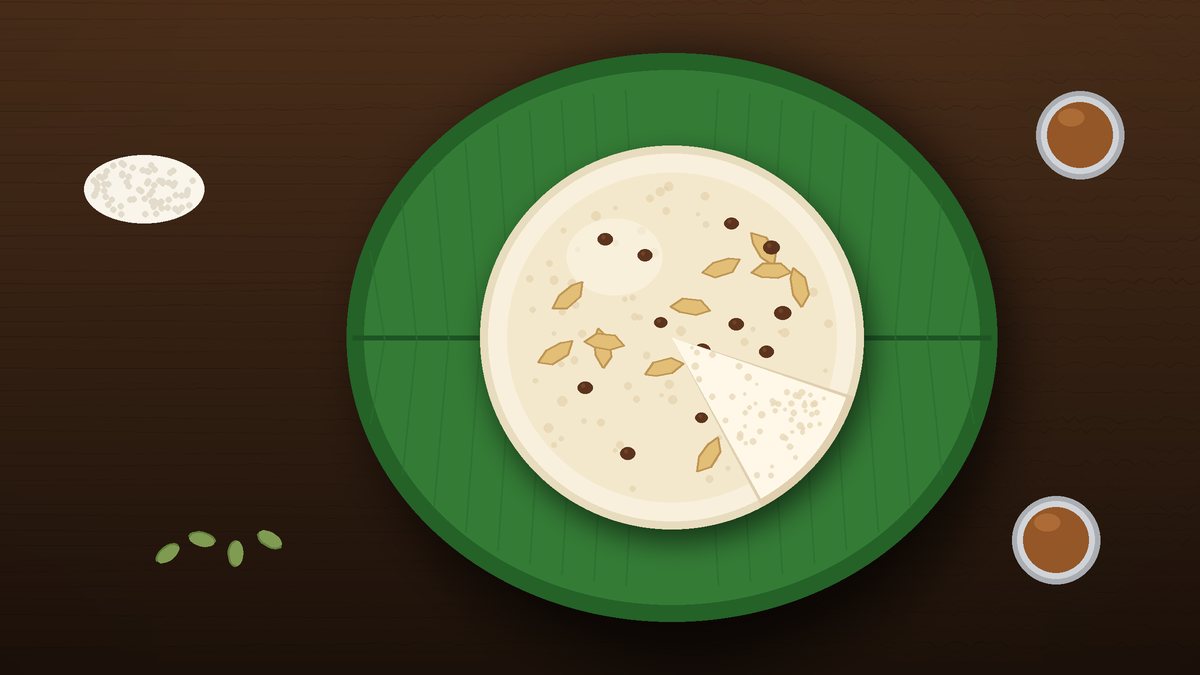
The short answer: vattayappam is a Kerala steamed rice cake made from rice flour, coconut, sugar and a little yeast. The batter ferments for a few hours until it doubles, then steams for about 25 minutes in a round greased tin. It comes out pale, soft and spongy, lightly sweet and scented with cardamom, with no oil in the cake itself. For a 20 cm (8 inch) cake you need about 250 g of fine rice flour, 1 cup of grated coconut, 3/4 cup of sugar and 3 to 4 hours of rising time.
If you have only met appam as a lacy pancake or puttu as a savoury cylinder, vattayappam is the sweet, cake-shaped member of the family. It is a tea-time snack in many Kerala homes, and many families also make it at Christmas and Easter. It is easy once you know two things: how thick the batter should be, and when to stop waiting for it to rise.
At a glance
- Makes: one 20 cm cake, 8 wedges
- Time: about 30 minutes of work, 3 to 4 hours of fermenting, 25 minutes of steaming
- Texture: soft, springy and moist, with a fine crumb like an idli but sweeter
- Flavour: mild sweetness, coconut, cardamom, ghee-fried cashews and raisins on top
- Serve with: hot tea or coffee, or a mild stew at breakfast
What is vattayappam?
The name is usually explained as vattam, meaning round, plus appam, which in Malayalam covers many rice-based cakes and pancakes. It is a steamed cake rather than a baked one, so the crust stays pale and soft. Wikipedia's entry on appam describes vattayappam as made from rice flour, sugar and coconut, steam-cooked, and as an oil-free tea-time snack in a majority of Kerala households. It adds that the dish is very similar to the Vietnamese bánh bò.
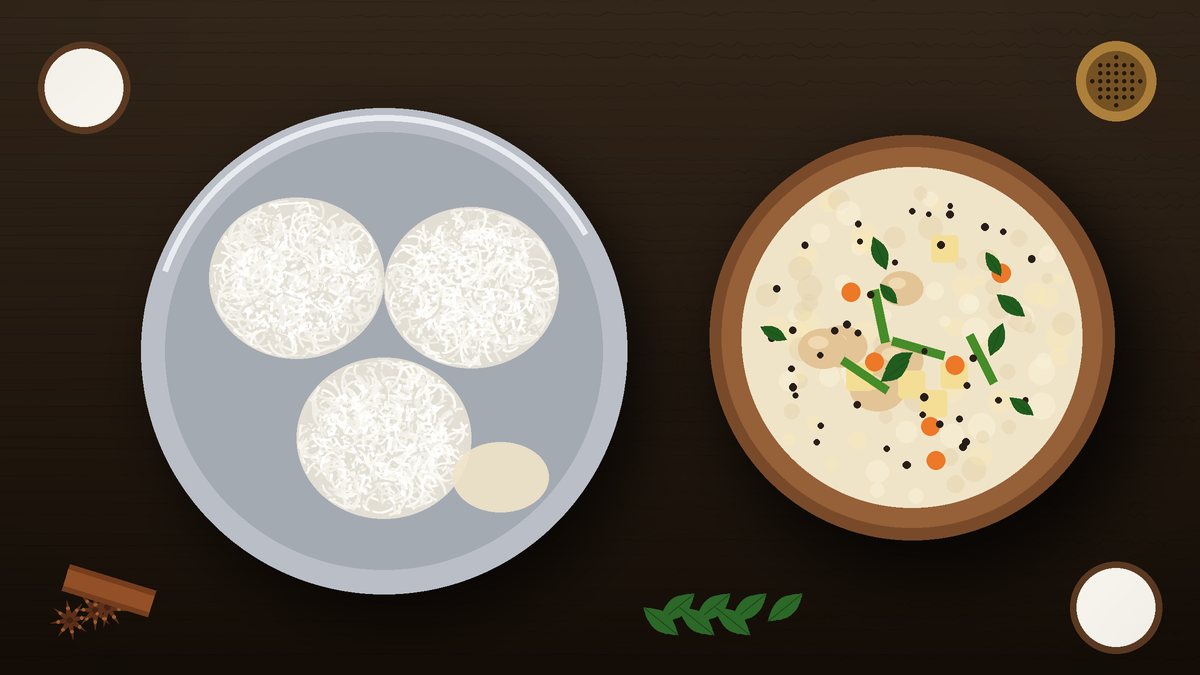
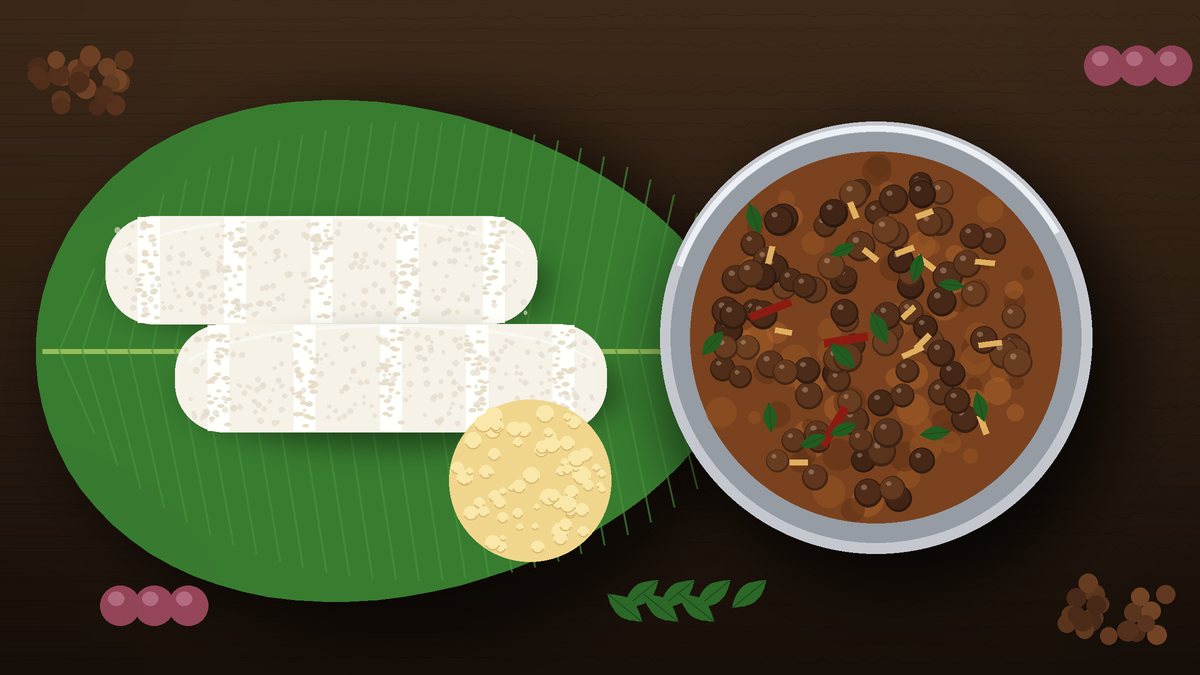
That explains how it differs from its relatives. Appam is a thin fermented pancake cooked in a bowl-shaped pan. Puttu is dry, crumbly rice flour steamed in a tube and eaten with curry. Unniyappam is a jaggery-sweet fried dumpling. Vattayappam is one wide, soft, steamed cake that you slice like a cake.
Ingredients
For the batter
- 250 g (about 2 cups) fine raw rice flour (the type sold for appam or idiyappam, not roasted puttu flour)
- 1 cup freshly grated coconut (or thawed frozen coconut)
- 1/2 cup cooked rice, optional but it makes the crumb softer
- 1/2 to 3/4 cup sugar, depending on how sweet you like it
- 1/2 teaspoon instant yeast (or 1 teaspoon active dry yeast, proofed in 2 tablespoons of warm water)
- 1 teaspoon cardamom powder
- 1/4 teaspoon salt
- About 1 cup warm water, or part coconut water for a gentle sweetness
For the topping and the tin
- 1 tablespoon ghee for greasing, plus 1 teaspoon to fry the nuts
- 10 cashews, halved
- 1 tablespoon raisins
You also need a steamer (an idli steamer or any pot with a rack and a tight lid) and a round tin or steel plate with a rim that fits inside it, about 20 cm across and 4 to 5 cm deep.
How to make vattayappam
- Blend the wet base. Put the coconut, cooked rice, sugar, yeast and about 1/2 cup of the warm water in a blender. Blend until completely smooth. Rub a little between your fingers: you should feel no grit.
- Make the batter. Put the rice flour in a large bowl with the salt and cardamom. Pour in the blended mixture and add the remaining water a little at a time, whisking, until you have a thick, smooth batter that falls from the whisk in a slow ribbon. It should be thicker than dosa batter and about the texture of a loose cake batter.
- Ferment. Cover the bowl and leave it in a warm spot for 3 to 4 hours, until the batter has roughly doubled and the surface is bubbly. In a cool kitchen allow up to 6 hours. A faint sweet, yeasty smell is normal; a sharp sour smell means it has gone too long.
- Prepare the steamer. Bring 3 to 4 cm of water to a boil. Grease the tin generously with ghee. Fry the cashews and raisins in 1 teaspoon of ghee for a minute until the cashews turn light gold.
- Fill the tin. Stir the batter once, gently, only to even it out. Do not beat the air out. Pour it into the tin so that it is no more than two-thirds full, and scatter the cashews and raisins over the top.
- Steam. Place the tin on the rack over boiling water, cover with a tight lid wrapped in a cloth (so condensation does not drip onto the cake) and steam on medium-high heat for 25 minutes. Do not lift the lid for the first 15 minutes.
- Test and rest. Insert a toothpick in the centre; it should come out clean. If wet batter clings to it, steam for another 5 minutes. Let the cake rest in the tin for 10 minutes, loosen the edge with a knife, turn it out and cut into wedges.
The batter and the steam: why this recipe works
Two things decide whether vattayappam is soft or dense.
Batter thickness. Rice flour holds no gluten, so the cake gets its lift from trapped gas bubbles and its structure from gelatinised starch. If the batter is too thin, the bubbles escape and the cake steams flat and gummy. If it is too thick, it cannot rise and turns heavy. The slow ribbon test in step 2 is the guide. If you are unsure, start thicker: you can always whisk in a spoon of water before steaming.
Gentle fermentation and hot, steady steam. Yeast produces gas as the batter rests, and the cake sets quickly once it hits strong steam. That is why the water must already be boiling when the tin goes in, and why opening the lid early lets cool air in and can make the centre sink. Wrapping the lid in a cloth keeps water drops off the surface.
Fixing common problems
- The cake is dense or rubbery. The batter was too thick or the yeast was weak. Use fresh yeast, proof it if it is active dry, and check the ribbon thickness.
- It did not rise during fermenting. The room is too cold. Put the bowl in an oven with only the light on, or near a warm spot, and give it an extra hour.
- It smells sour or strongly of yeast. It fermented too long or in too much heat. Next time stop as soon as it has doubled, or cut the yeast to 1/4 teaspoon.
- The top is wet or the centre sinks. The lid was lifted early, water dripped on the cake or the tin was overfilled. Use a cloth-wrapped lid and fill the tin only two-thirds.
- The middle is raw. The tin is too deep for the time. Steam 5 minutes longer or use a shallower tin.
- It sticks to the tin. Grease the sides and base well with ghee, and rest the cake 10 minutes before turning it out.
Variations
- Jaggery vattayappam. Replace the sugar with melted, strained jaggery for a darker, caramel flavour. Let the syrup cool before blending so it does not kill the yeast.
- Soaked rice version. Many home cooks grind raw rice soaked for 4 hours instead of using flour. The result is a slightly more textured cake and needs a proper wet grinder or strong blender.
- Toddy version. In some households, toddy replaces yeast as the rising agent. Without access to fresh toddy, yeast is the practical choice.
- Plain tea cake. Skip the nuts and raisins, add a pinch of fennel or a spoon of grated coconut on top.
What to serve with vattayappam
Most people eat it as is, with a glass of hot tea or coffee, especially on a rainy evening alongside pazham pori. At breakfast, some families serve it next to a mild, creamy dish such as Kerala chicken stew, the way string hoppers go with stew. Because the cake is only lightly sweet, it handles both roles. If you like Kerala desserts, palada payasam and ada pradhaman are the richer end of the same rice-and-coconut pantry.
Storing and reheating
Cool the cake completely, then keep it covered at room temperature for up to a day, or in the fridge for up to 3 days. Reheat wedges in the steamer for 3 to 4 minutes, or microwave a wedge for 20 to 30 seconds, covered with a damp paper towel. Cold rice cake firms up, so warm it before serving.
FAQ
Can I make vattayappam without yeast?
Traditionally yeast or toddy provides the lift. Baking soda or fruit salt can raise a cake quickly, but the texture and flavour differ and the result is closer to a steamed sponge than a fermented cake. For the classic soft, springy crumb, use yeast.
Can I use roasted rice flour or puttu flour?
It is not recommended. Roasted puttu flour is dry and sandy, and it does not form a smooth batter. Use fine raw rice flour labelled for appam or idiyappam.
How long should the batter ferment?
Typically 3 to 4 hours in a warm kitchen, until it has roughly doubled and looks bubbly. In cold weather it can take 6 hours. Judge by volume and bubbles, not the clock.
Can I bake it instead of steaming?
You can, but it is a different cake: it browns, forms a crust and loses the moist, pale crumb that defines vattayappam. Steaming is the method.
Why is it called vattayappam?
Most explanations trace it to vattam, the Malayalam word for round, and appam, the word for a rice cake or pancake: a round rice cake.
Sources
- Wikipedia, Appam: Vattayappam (rice flour, sugar and coconut; steam-cooked; oil-free tea-time snack in Kerala)
- Wikipedia, Kerala cuisine (vattayappam among the rice-based snacks)
- Video credit above: Shaan Geo on YouTube (a rice-flour vattayappam method in Malayalam)